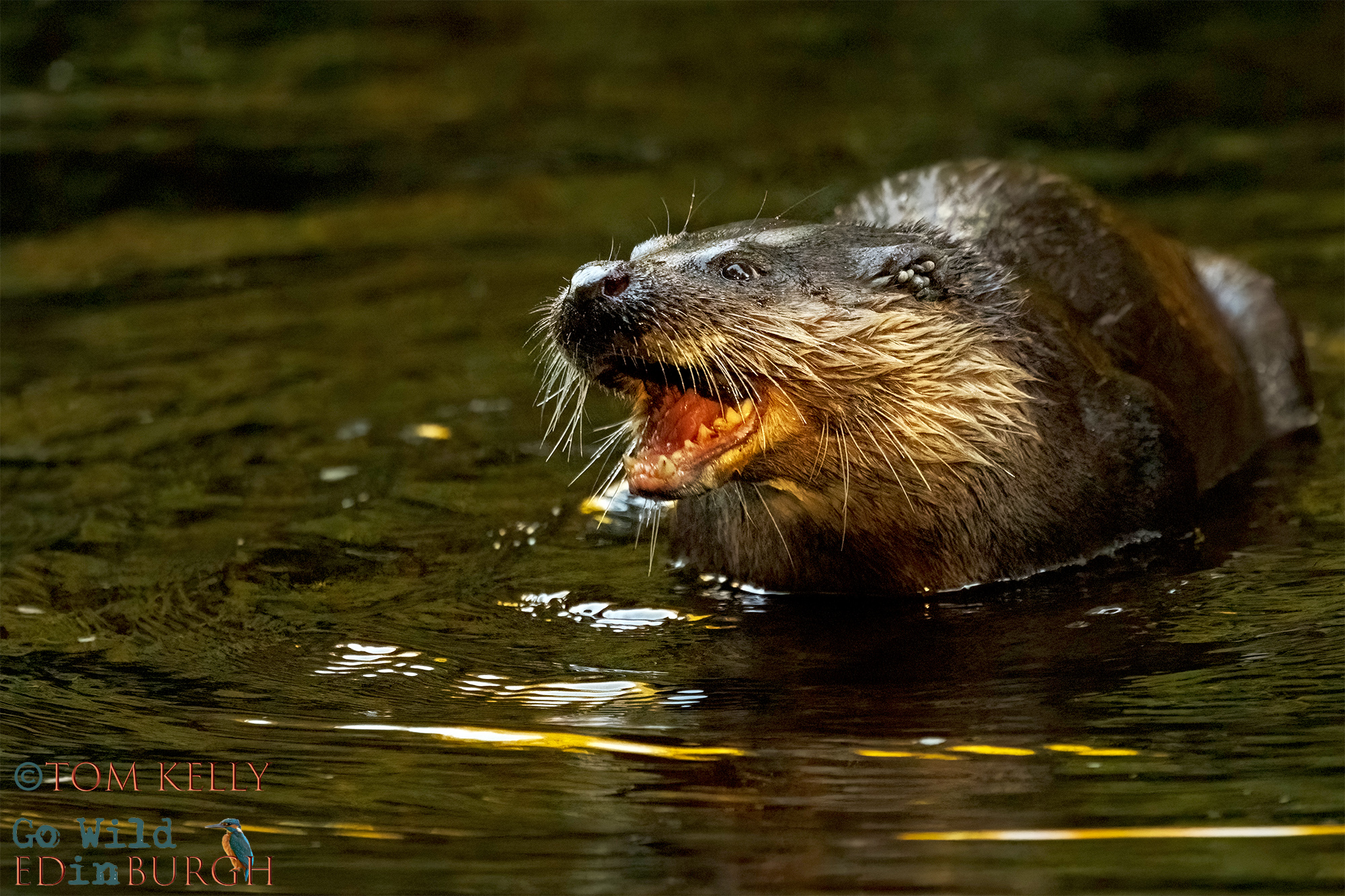
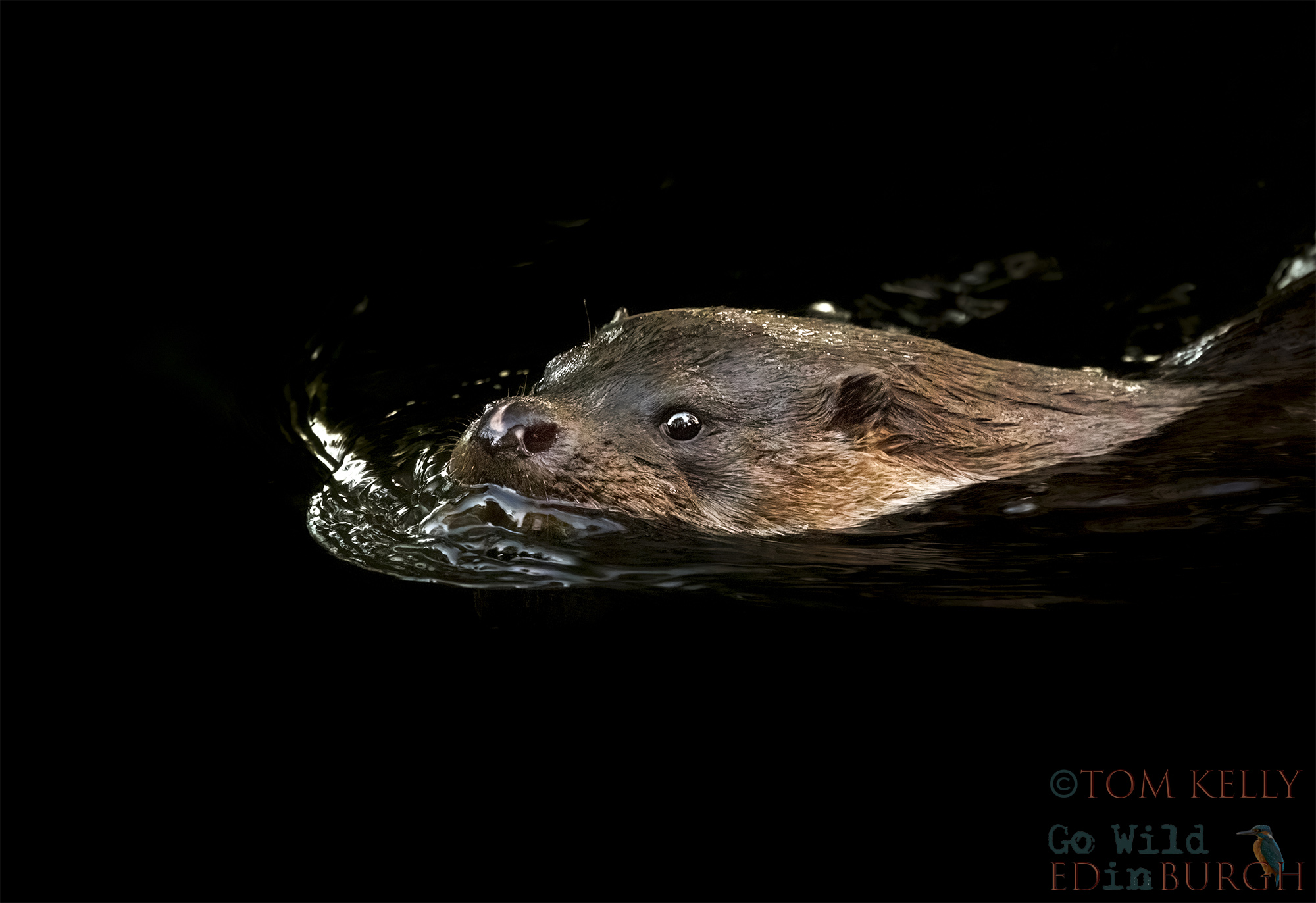
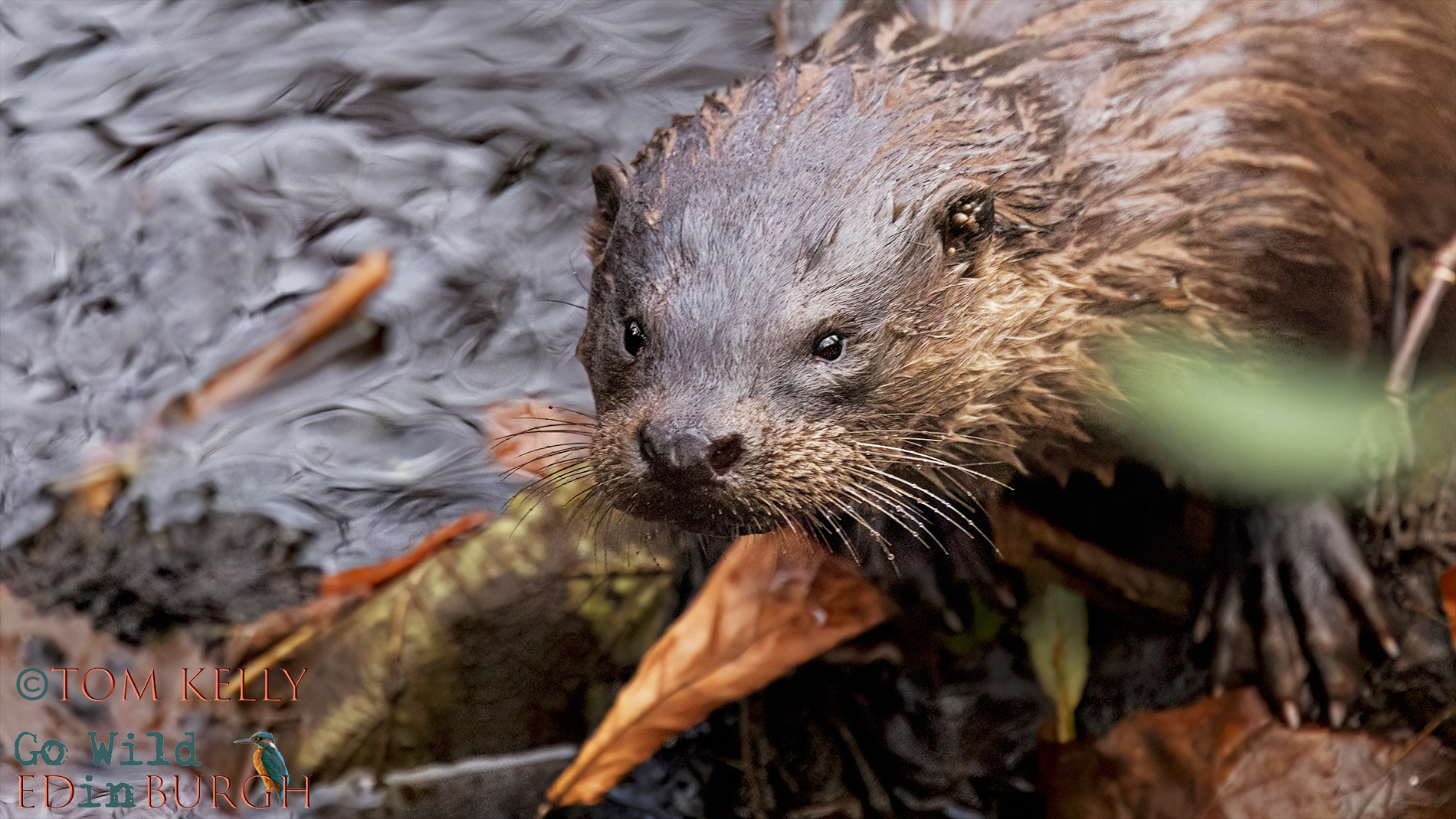
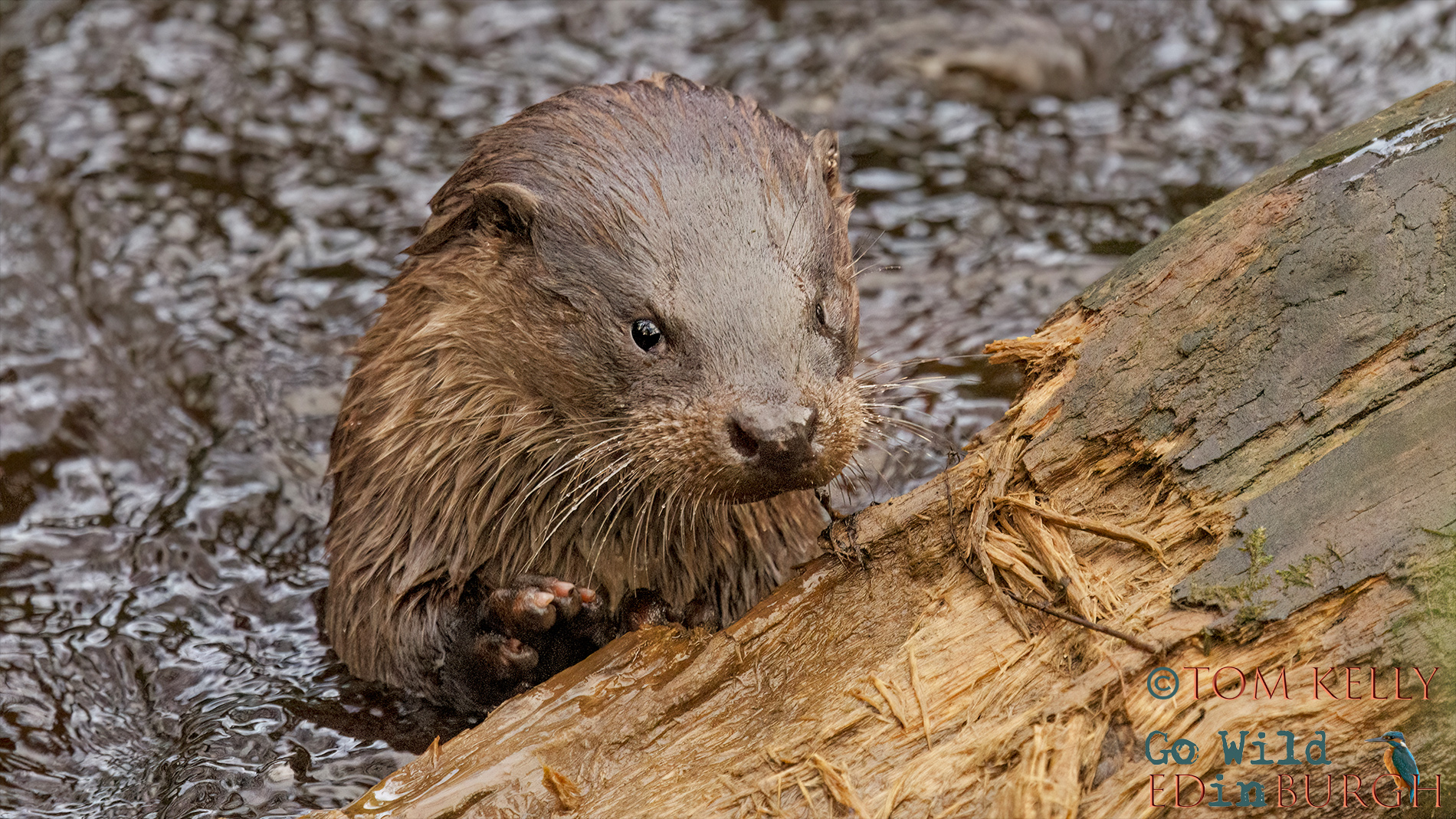
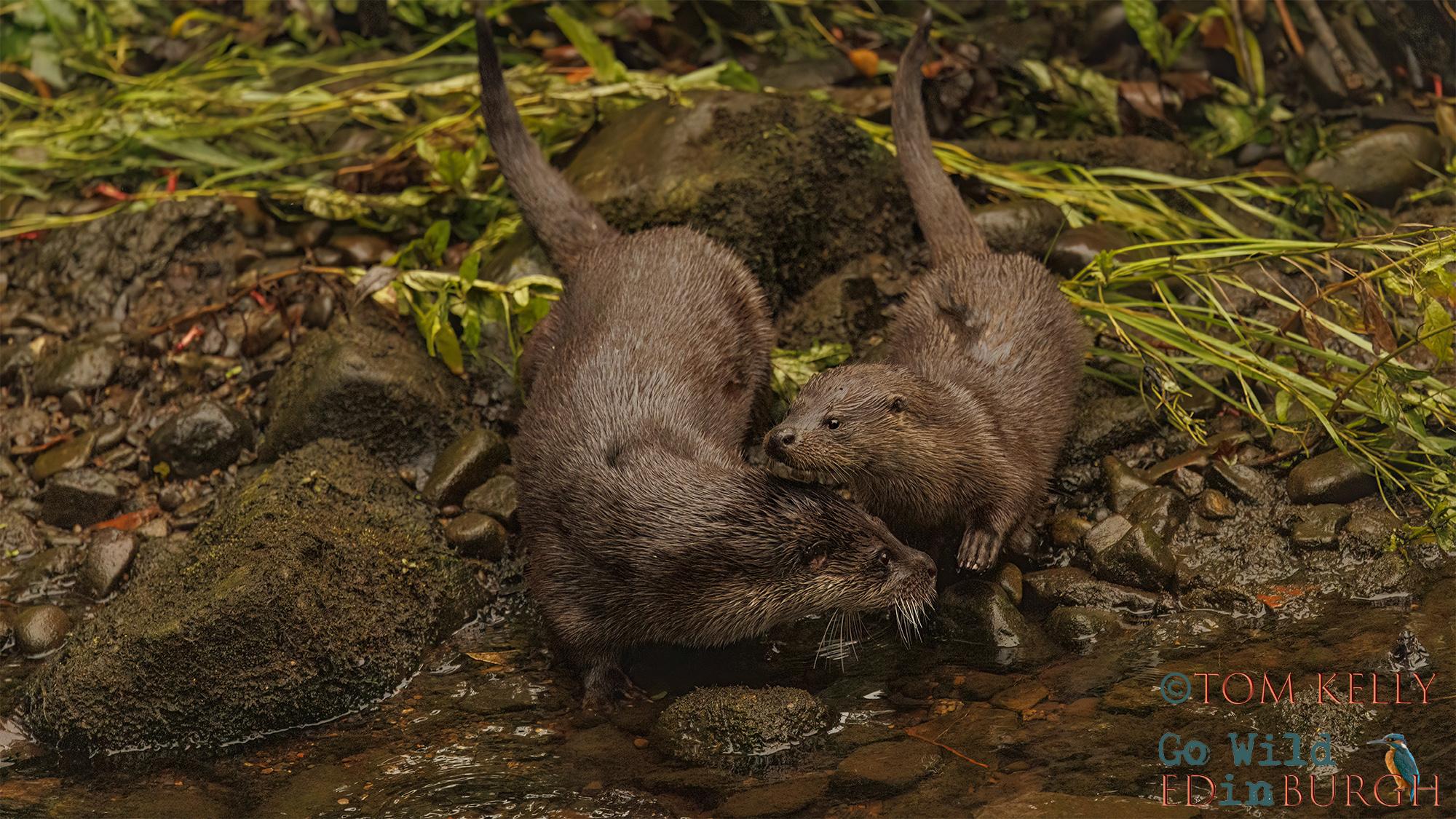
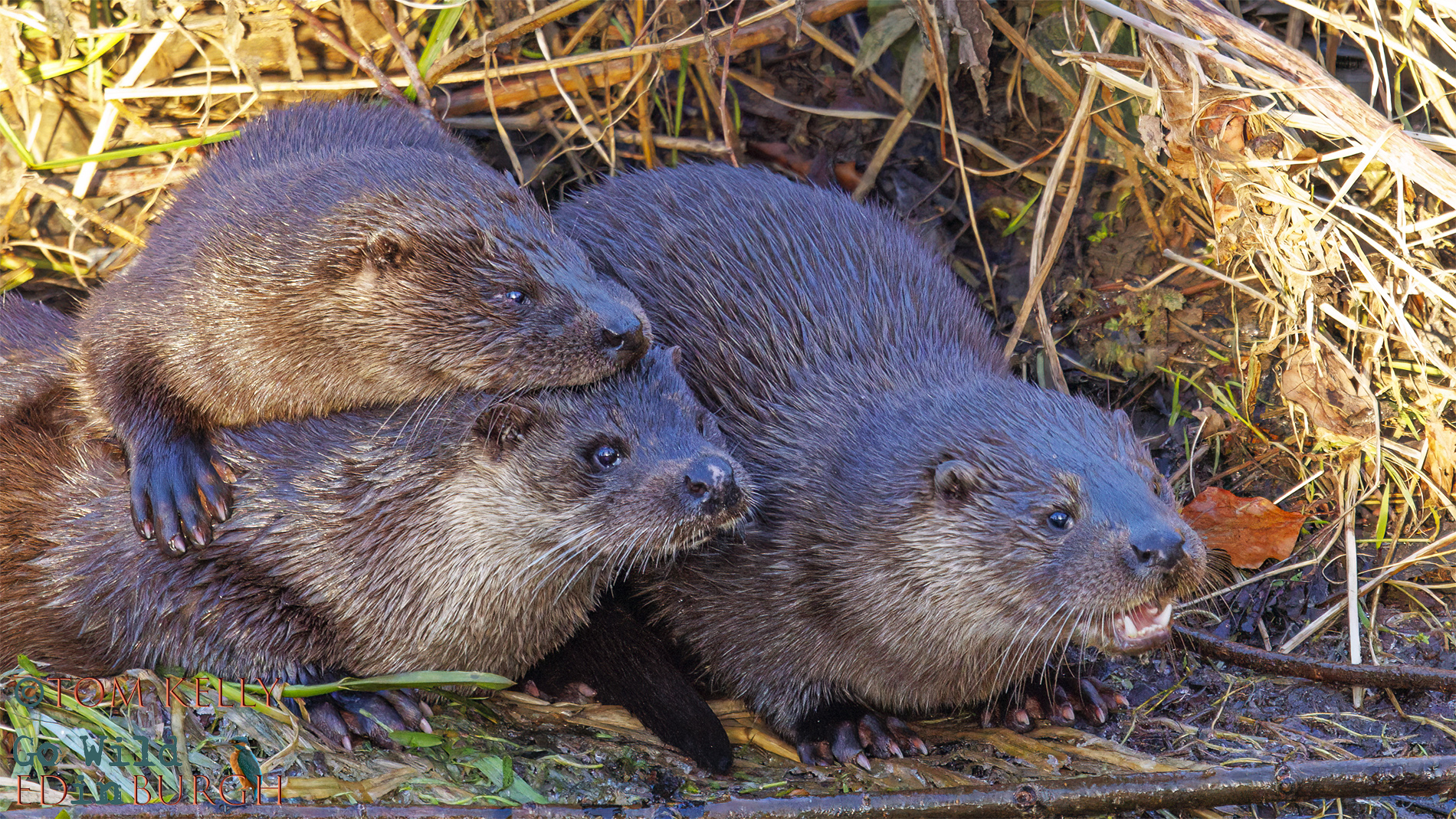
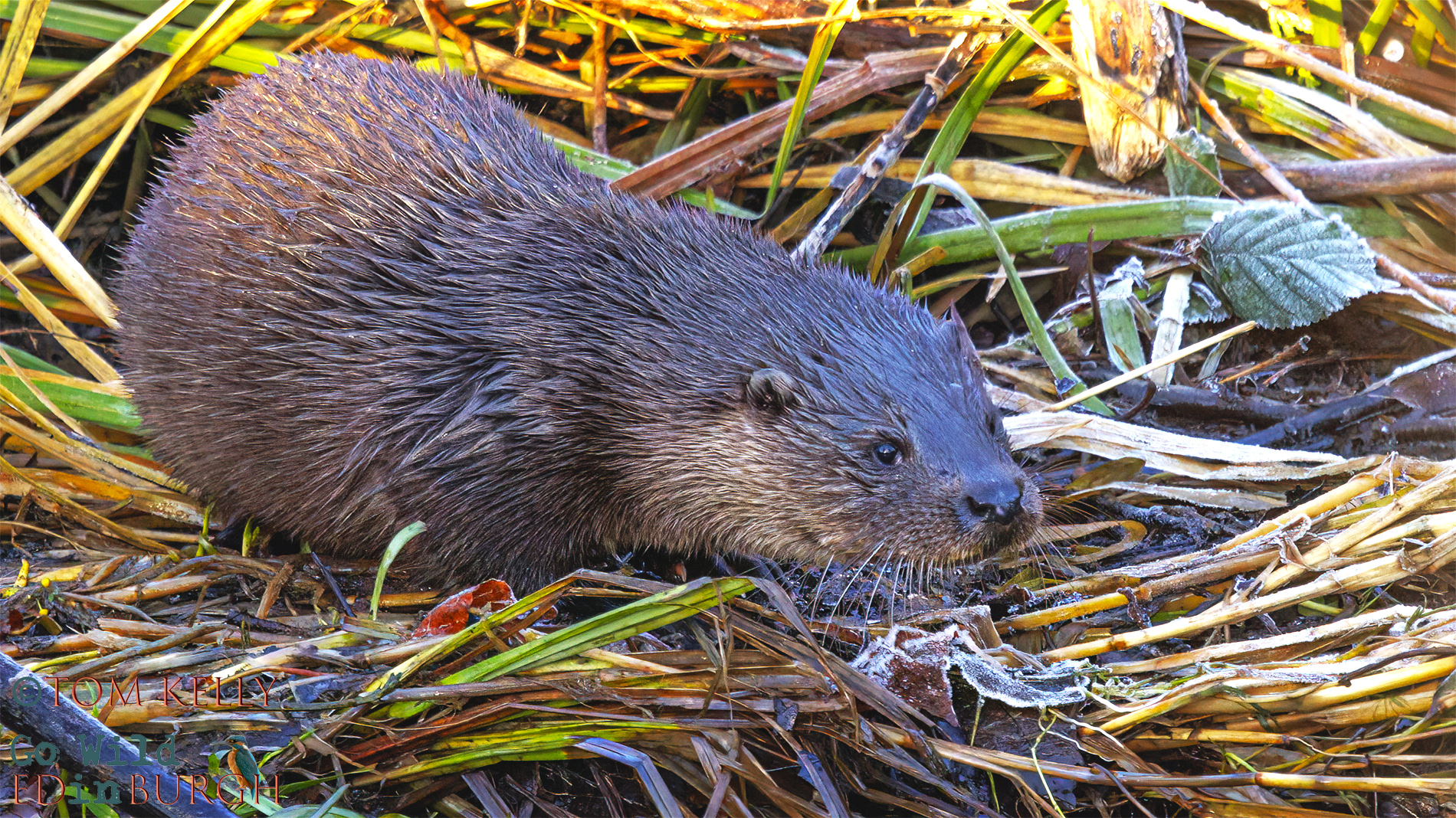
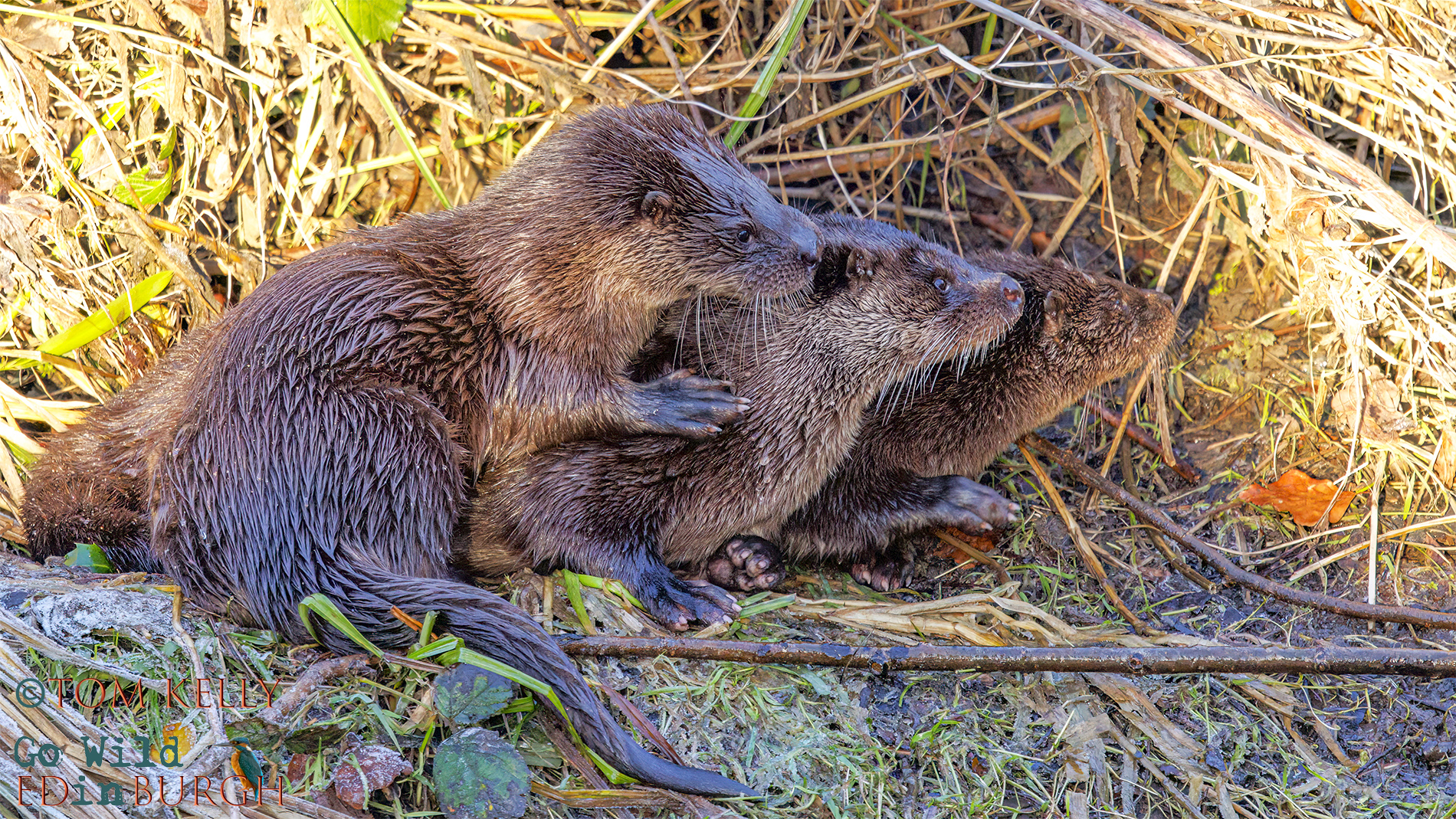
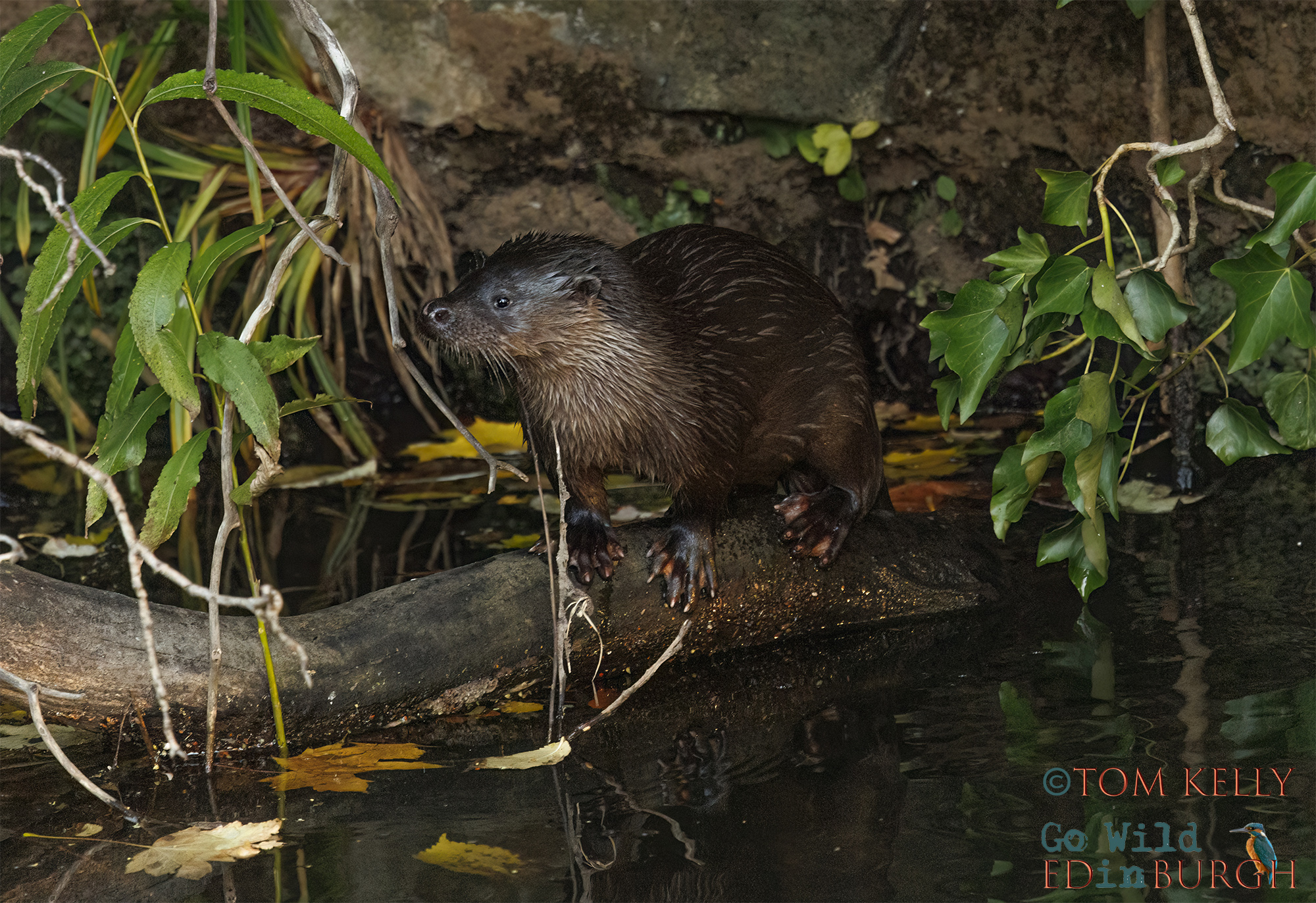
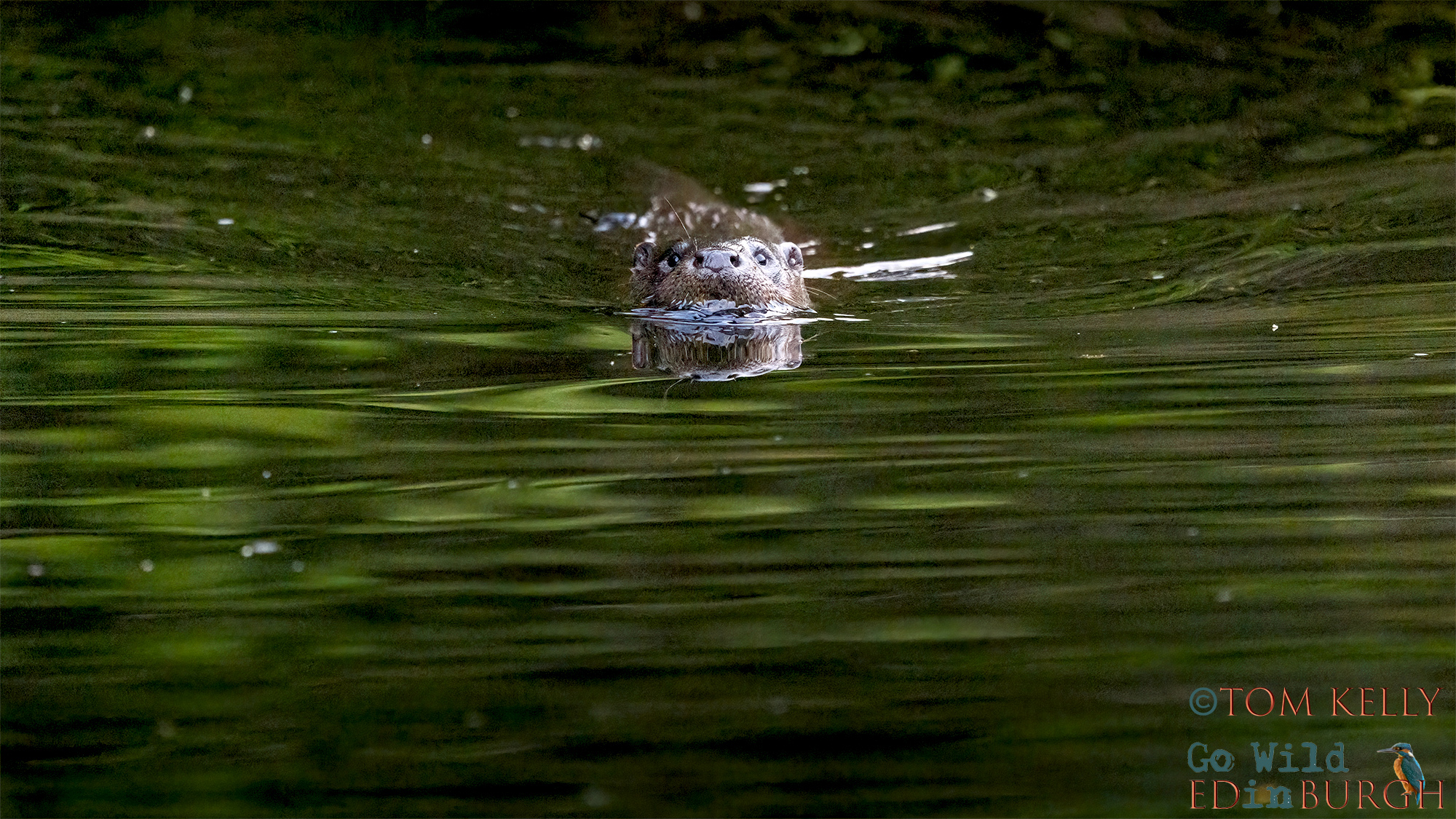
SPOTTING OTTERS ON THE WATER OF LEITH
Every week, through my social media accounts, websites, on the Water of Leith Walkway and at other wildlife locations around Edinburgh, people ask me where they can see otters.
I completely understand why. Otters are fascinating, elusive animals and seeing one in the wild, particularly in the middle of a city, is a very special experience.
However, giving out precise location information about protected wildlife on a regular basis, either by word of mouth or through social media, would be irresponsible of me. More importantly, it would be of no benefit to the otters themselves.
I know that many people would love to see these wonderful creatures, so I have put together a few pointers that should increase your chances of finding otters for yourself, along with some important precautions that need to be observed.
The reason for those precautions is simple: otters are extremely vulnerable within an urban environment.
Take 2023, for example, seven otters died on or close to the Water of Leith. Two died as a result of road traffic accidents, while another death was attributed, at post-mortem, to a possible respiratory tract problem. Several young cubs also disappeared and are no longer with us, although the exact reasons are unknown. Separation from their mother and an inability to fend for themselves, at such a young age, are the most likely explanations.
Between 2024 and 2026, several more young otter cubs have sadly died following separation from their mothers. Some of these separations were caused by high, fast-flowing water, after heavy rain, which is simply part of the natural environment. Others occasions are where human activity may have played a part, such as people gathering around or following otters, until the cub goes one way and the mother goes another. We can all help by giving them the space they need. These little creatures are therefore vulnerable enough without us adding to the pressures they already face.
If any of us were to publish very specific locations for where we had spotted an otter, it would not benefit the otters. If anything, it could make their situation more precarious. My hope is that by sharing some general information about their behaviour and habitat, people can observe them with greater understanding and, most importantly, with greater care.
The advice below is not only useful for looking for otters on the Water of Leith. Much of it can also be applied to the Union Canal, River Esk, River Almond and many of the ponds, rivers and other waterways in and around Edinburgh, as well as further afield.
WHERE CAN YOU SEE THEM?
- There is no great secret that otters have been recorded at almost every part of the Water of Leith Walkway, from Balerno all the way down to Leith, over the years.
- When I am photographing wildlife on the Water of Leith, I tend to concentrate on the section within the city boundary. I do travel out to Balerno several times a month, but I prefer to be at eye level with the water. For that reason, the section from Bog’s Mill Bridge to Leith is my preferred area.
- In theory, if you walked this section regularly, on your own, over a three-month period, concentrating on watching the water and listening for splashing — without headphones — I would be confident that you would eventually see an otter. I cannot say how many you would see or how frequently, but the more times you spend quietly observing the river, the greater your chances become.
-
The most important thing to understand is that otters move around — a lot.
I have seen a mother and two cubs in one section of the river, only to find them 4–5 miles away the following day. I have also seen an otter on the Water of Leith one day and then found it on the Union Canal the next.
Male otters can have ranges of up to around 20 miles, while females may have ranges of approximately 12 miles. This makes it extremely difficult to predict where an otter will be on any particular day.
In other words, you have to put some miles in. Even then, seeing an otter can ultimately come down to being in the right place at the right time.
-
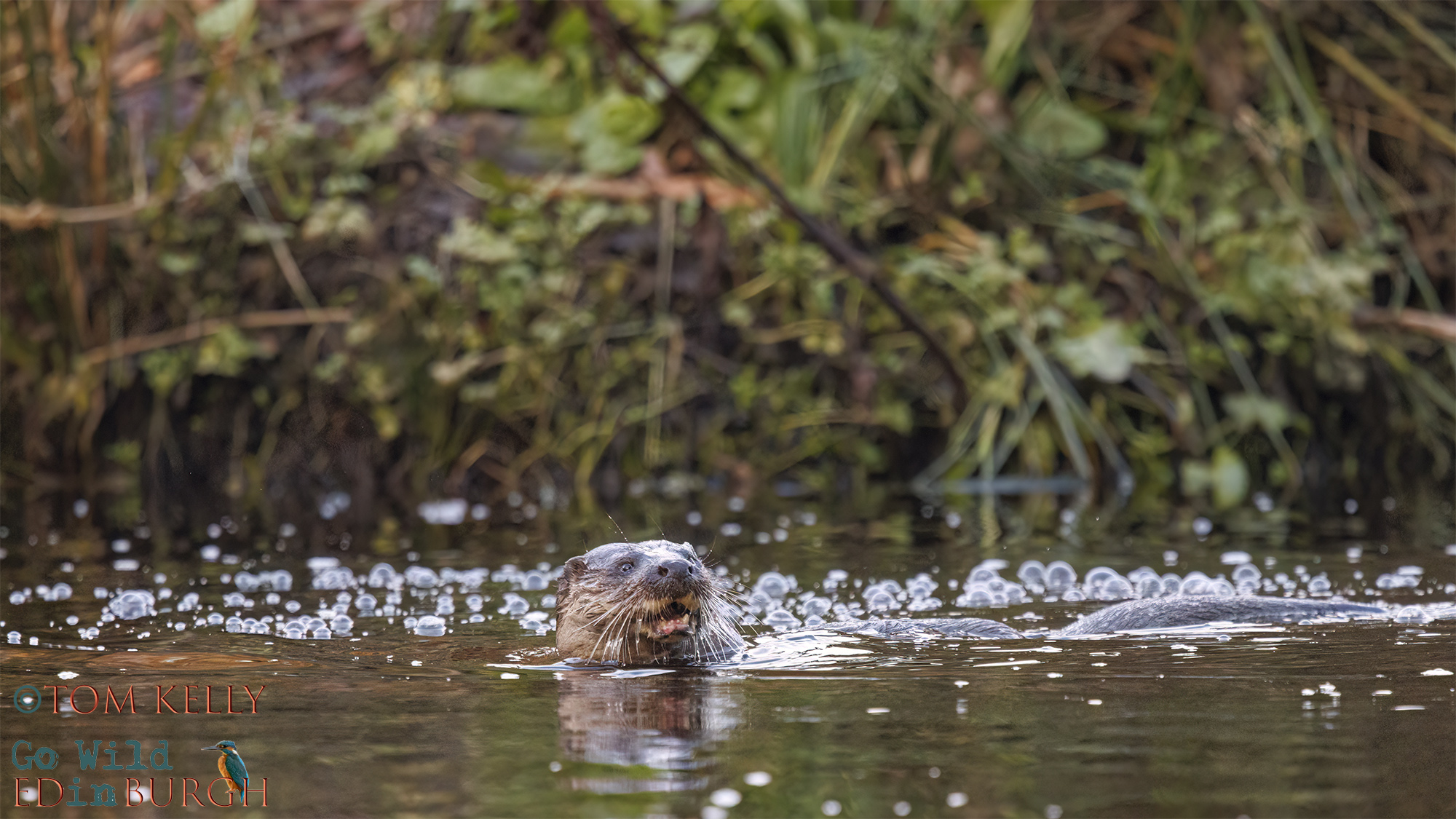
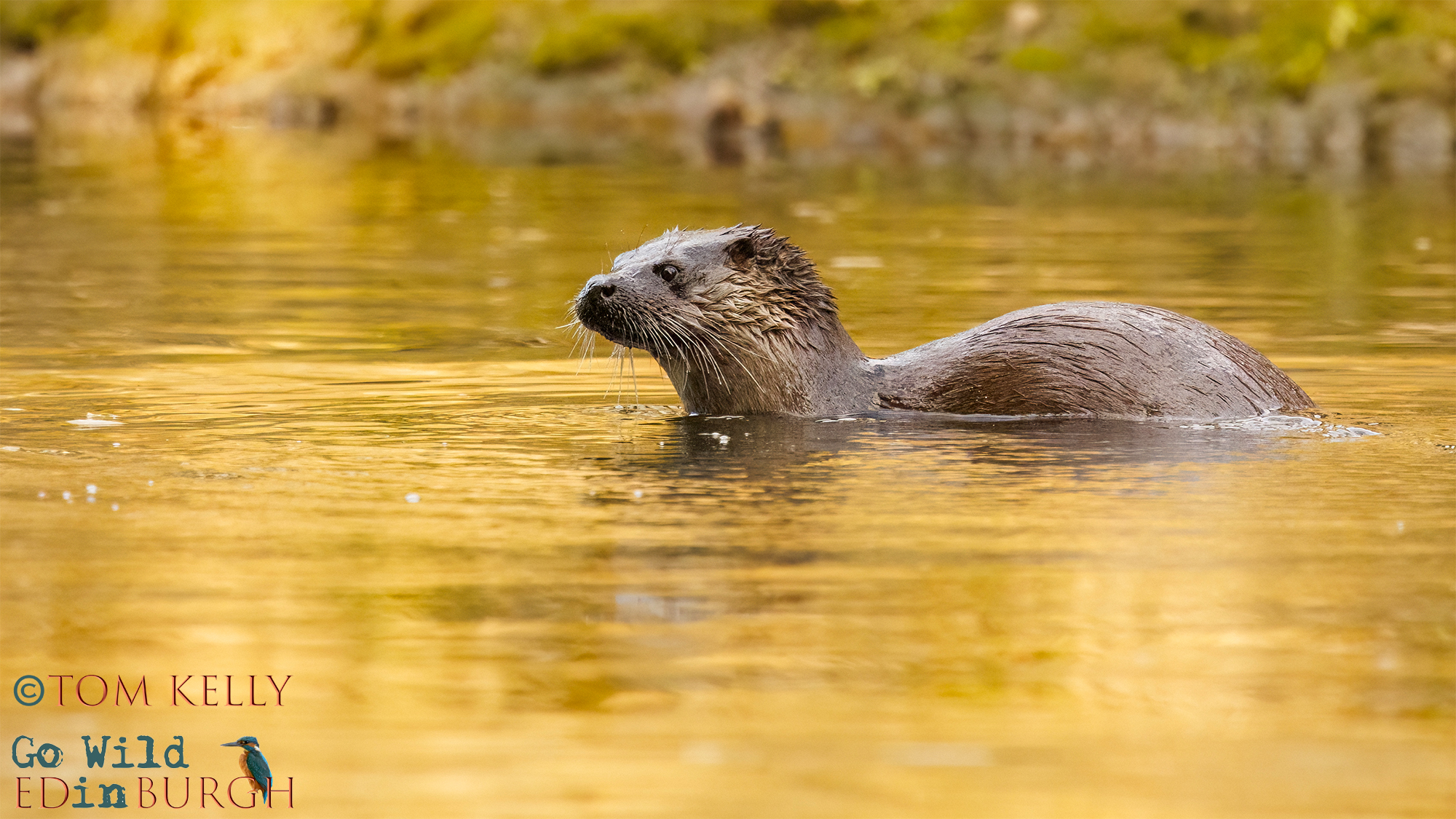
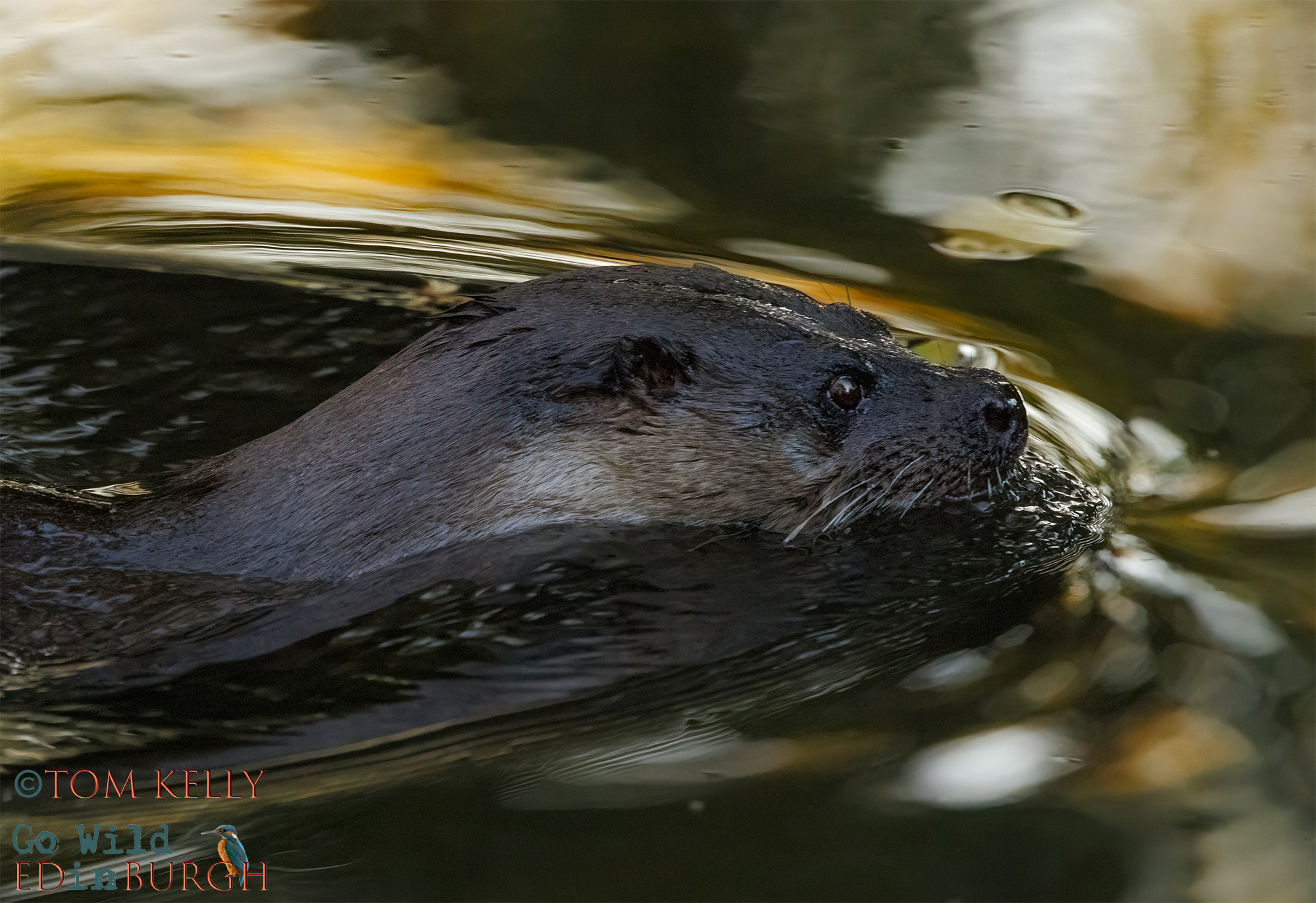
It is much easier to spot otters, and indeed many other species, when they are moving through still or slow-moving water. Their movements create ripples that are much easier to see in calm water than in fast-flowing sections of the river.
Therefore, whenever you pass a stretch of still or slow-moving water, slow down, look carefully and try to work out what is creating any ripples you see.
-
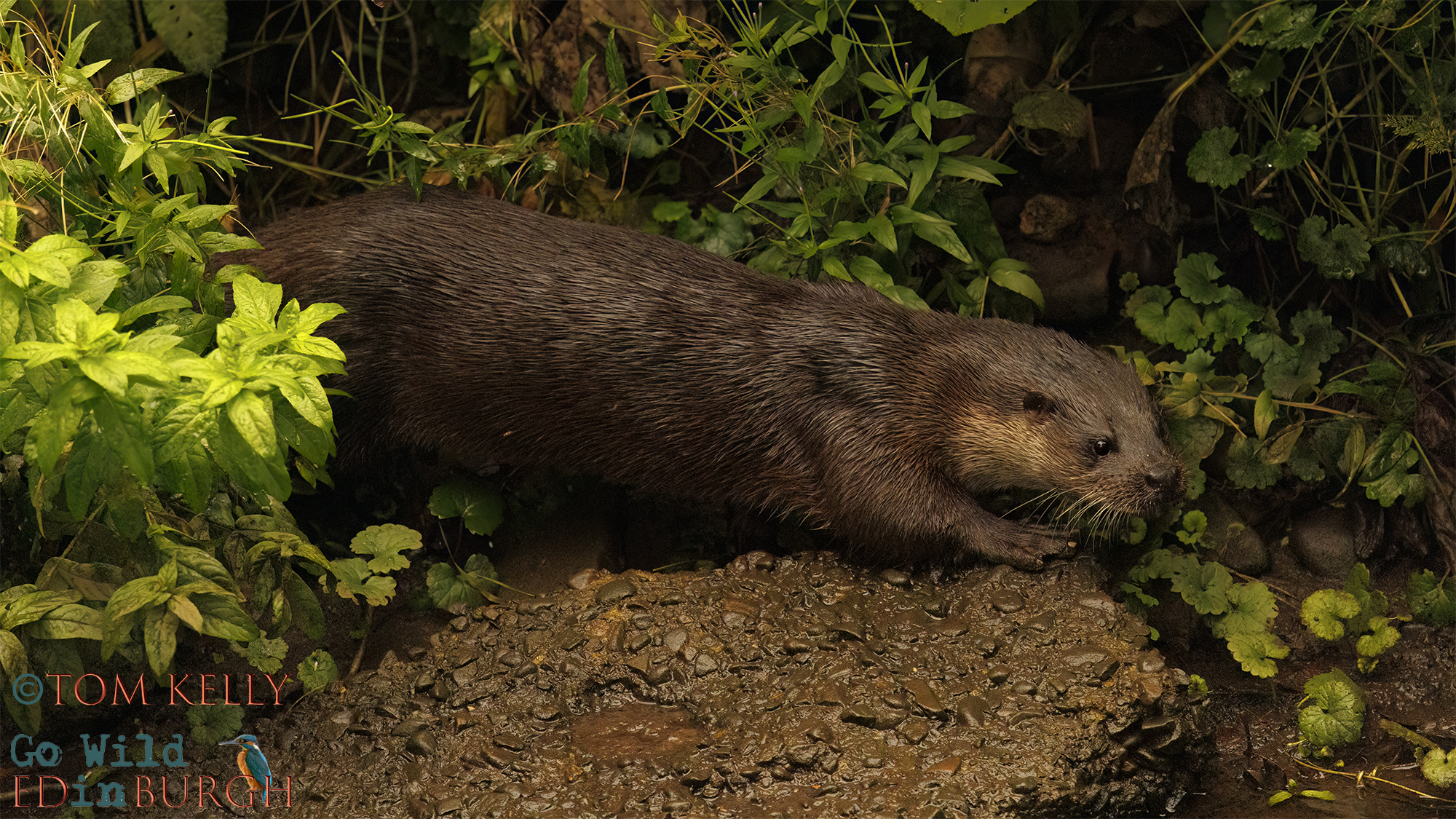
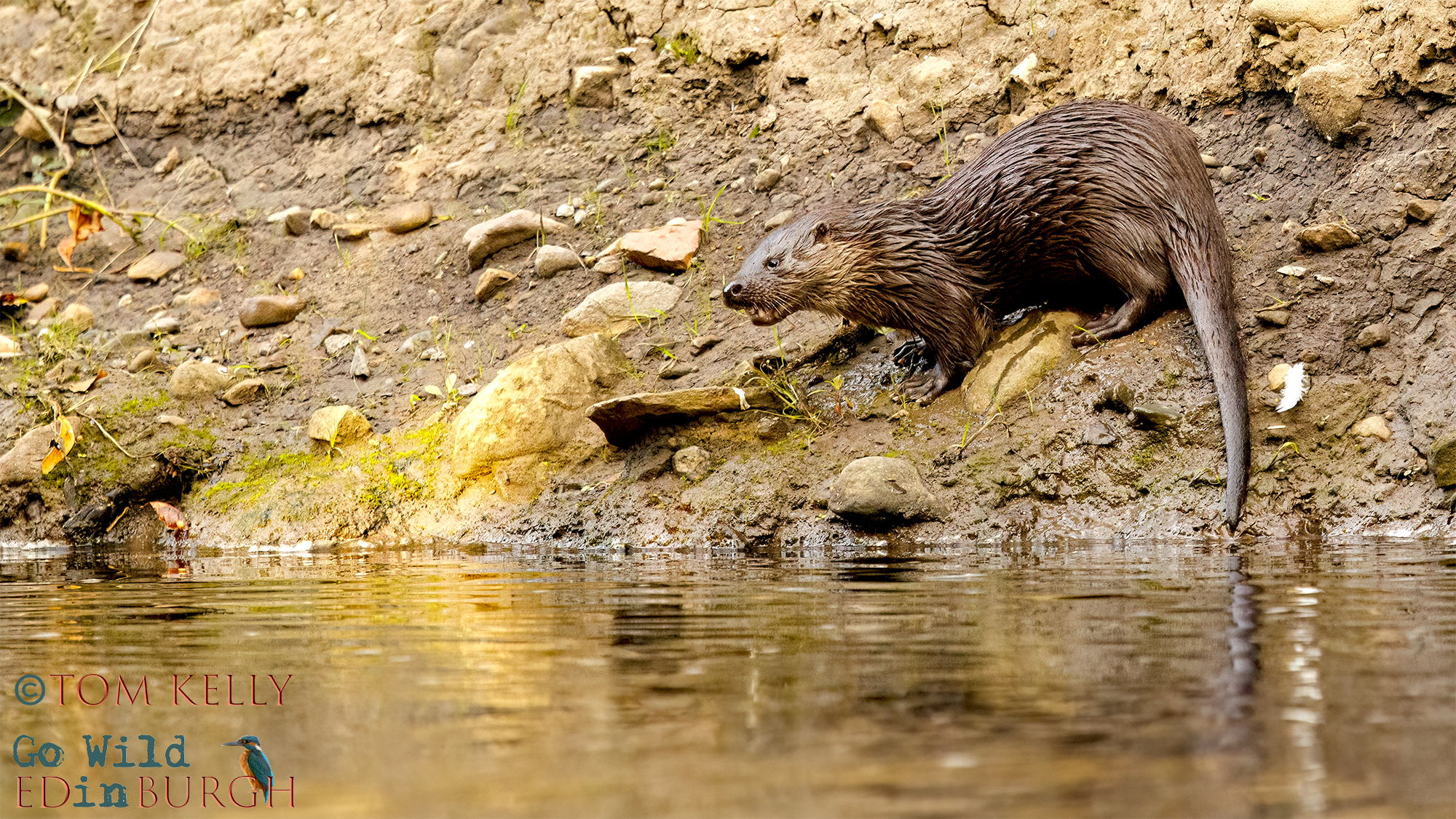
Otters do not always travel through the water. They will frequently move through the vegetation along the riverbank, particularly when water levels are very low during the summer. You may sometimes see and hear the tall vegetation moving, as an otter makes its way through it.
Another useful sign is an otter slide — a worn patch of vegetation on the riverbank where otters regularly enter and leave the water.
WHY YOU DON’T SEE OTTERS
- Otters are difficult to spot. Their dark brown coats can blend remarkably well with the colour and shadows of the Water of Leith.
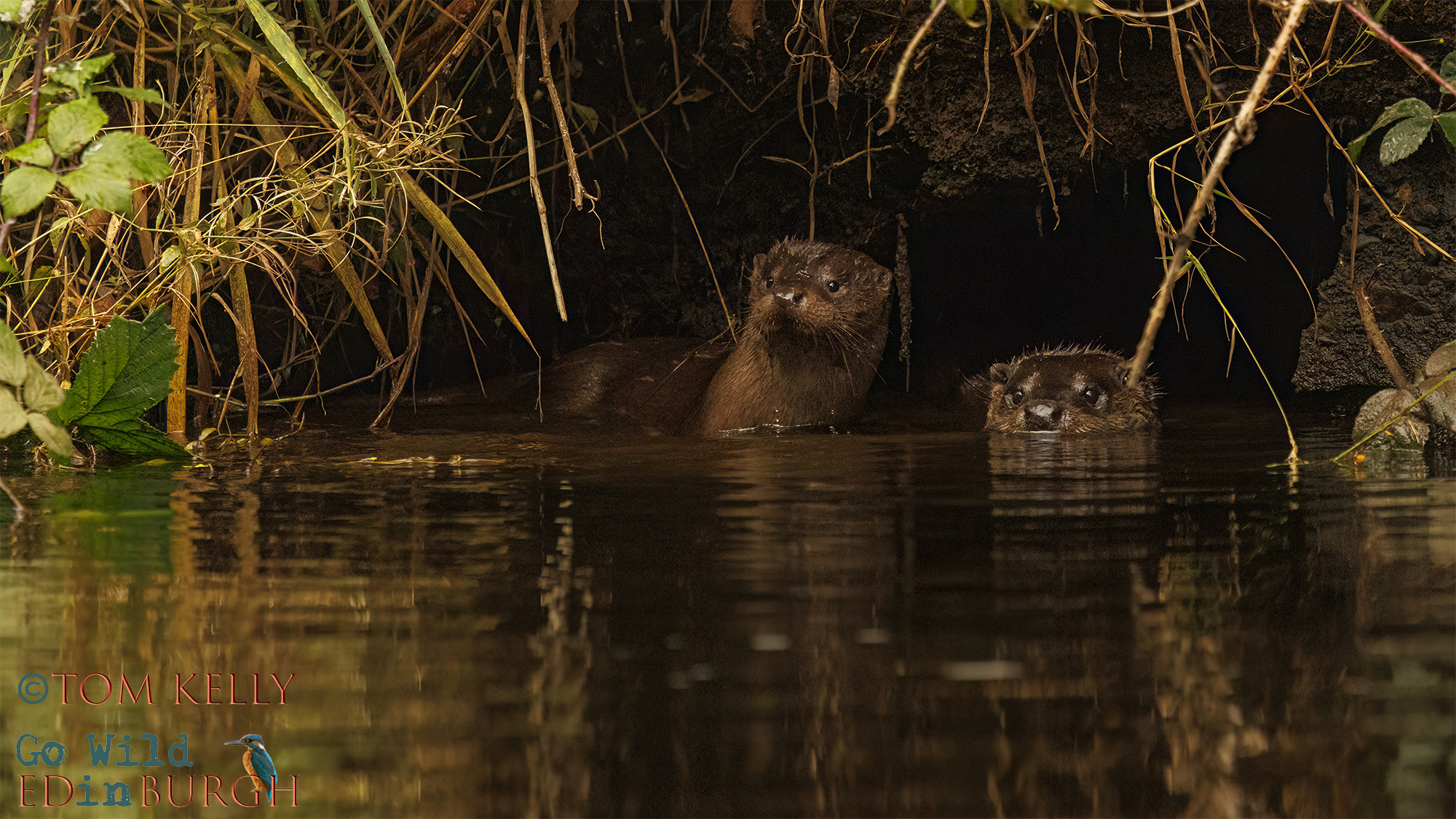
- They often travel close to the riverbank, beneath overhanging vegetation. This means that you may have a reasonable view if you are looking towards the opposite bank, but an otter can be almost impossible to see when it is travelling along the bank closest to you, underneath vegetation.
- As you walk beside the river, there are countless trees, bushes and other obstacles that interrupt your view, particularly during the summer months. Sometimes that is all it takes to miss an otter travelling in the opposite direction.
- Otters can also be active at night. In some circumstances, they may come out primarily to feed after dark. During the winter, when there may be only 6–8 hours of daylight, you can go for weeks or even months without seeing one.
WHAT DO THEY EAT & WHEN?
-
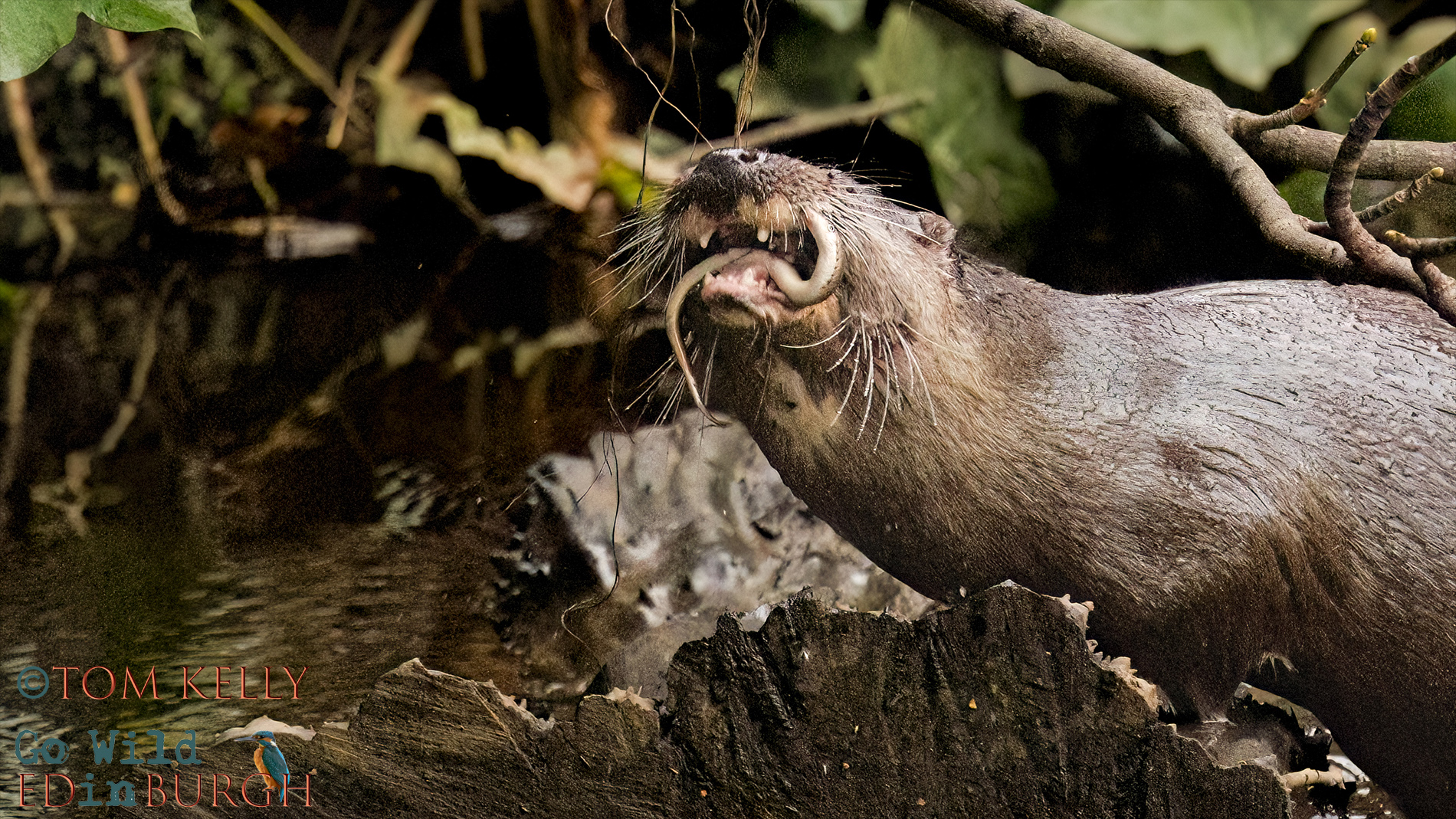
Otters primarily eat fish, although they will also take small mammals and other prey. Because fish make up such an important part of their diet, otters will move to wherever they can find a good supply. This is another reason why they can be so difficult to predict.
A mother with cubs may move away from a particular holt if she is disturbed or if she feels there is not enough food available. She can travel considerable distances to find another resting place where there is sufficient food for both herself and her cubs.
-
In an urban environment, otters tend to be crepuscular — essentially meaning that they are most active around dawn and dusk, although they can also feed throughout the night.
During the summer, I would say that you are likely to have more success during the 1–2 hours after sunrise and the 1–2 hours before sunset than any other times in the day. However, if an otter mum has cubs, these guideline don’t quite apply, as the cubs will eat whenever they’re hungry BUT there is some sort of structure to the process, as follows:
A mother feeds her cubs in the natal holt until they are 8-10 weeks old. After the cubs leave the natal holt & for the next 10-12 weeks the mother will take the cubs out to feed but she will catch & kill the fish and present it to her cubs in the water during the day & sometimes at night – this give the cubs experience of dealing with wet fish, in the water, in daylight & darkness. The following 10-12 weeks the mother does exactly the same but instead of killing the fish she gives the cubs live fish to deal with, once again in daylight and darkness. If a cub drops a live fish it then tries to get it back again & this leads onto the final stage where the cubs are shown the good fishing spot and they have to feed themselves.
This whole feeding education process can take up to six months, after the cubs leave the holt for the first time and they may well move back to a dawn/dusk eating habit thereafter.
-
When an otter is out and about, remember that it is there to feed. This is why it is so important not to disturb it.
An otter may make frequent stops to feed and can sometimes give you excellent views. However, if it spots you approaching, it may dive underwater and disappear. The consequence is that the otter has now been disturbed and may have to move elsewhere to find food. This burns up energy that the otter wasn’t expecting to expend.
If you see an otter, the best thing you can do is stay still. Wait until the otter dives for food. At that point, you can carefully move and hide yourself behind a tree, vegetation or other cover, keeping as low to the ground as possible.
STAY STILL – MOVE – HIDE – OBSERVE
WHAT SIGNS SHOULD YOU LOOK OUT FOR?
- If you can identify a long, relatively straight stretch of still or slow-moving water, this can be an excellent place to watch for otters and other wildlife.Even when an otter is hidden beneath vegetation along the riverbank, its movement through the water can create surprisingly large ripples.If you see ripples moving across the surface, it could be a duck or moorhen — but every so often, it will be an otter.
-
Become familiar with otter footprints and spraints.
Spraint is otter droppings, and they are often deposited in prominent places along the riverbank or on large rocks and boulders in the water. Both footprints and spraints are valuable clues that otters are using an area.
If several boulders in one location are completely dry but one is noticeably wet, there is a chance that an otter has recently been sitting or moving across it. You may also find spraint on or close to the same boulder.
-
Listen for the high-pitched squeaking calls of otter cubs.
If you hear this distinctive sound, it can be a very good indication that a family group is nearby. If you are unfamiliar with the call, it is worth listening to recordings online so that you know what to look for. However, this is also one of the most important situations in which not to approach – you do not want to led to separation between mum & cub. The risk of disturbing or separating them is simply not worth it.
-
Another useful sign is the sudden disappearance of ducks or moorhens.
If you see several waterbirds suddenly scatter from the river, there may be an otter nearby — although mink can produce a similar reaction.
-
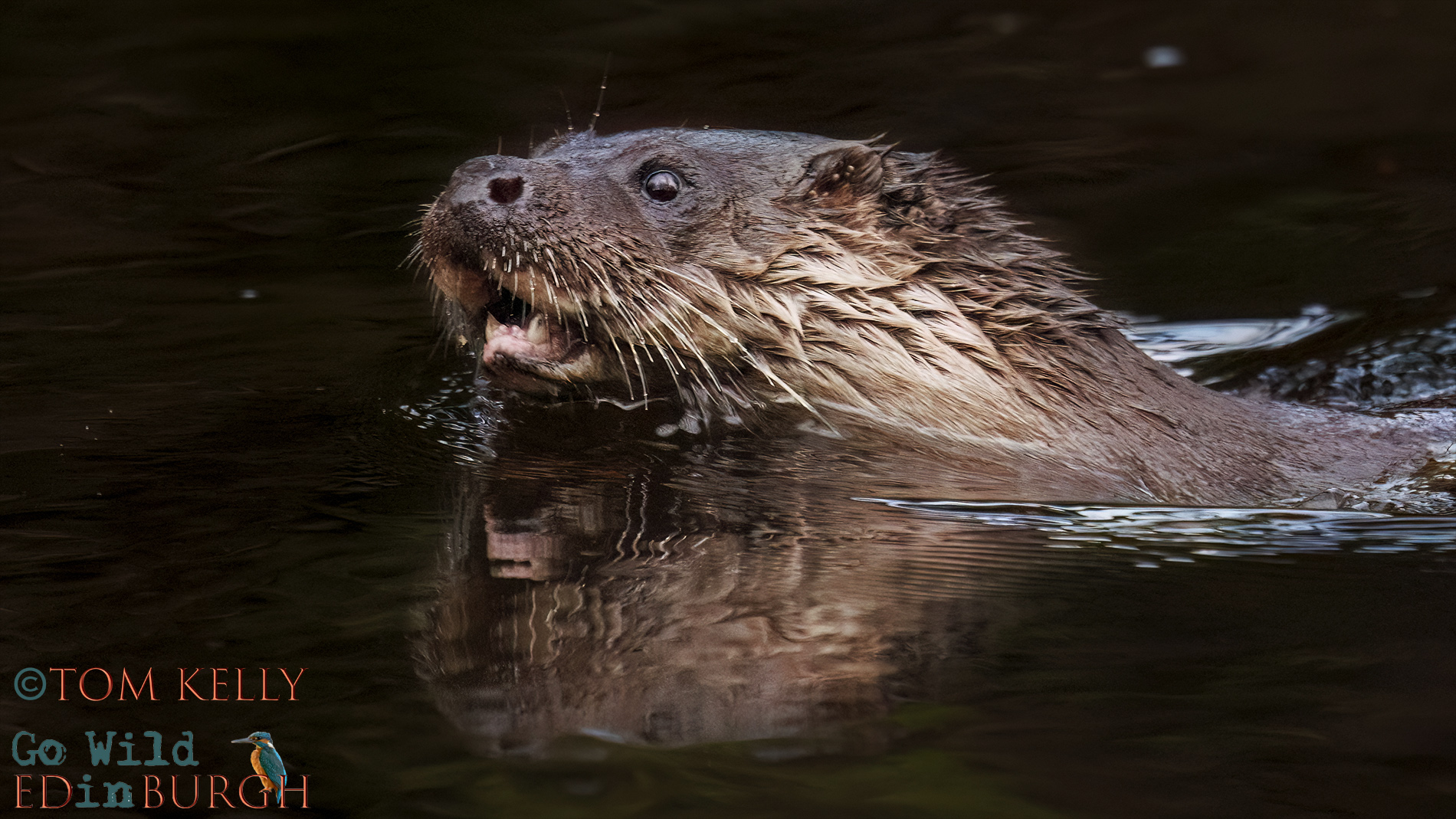
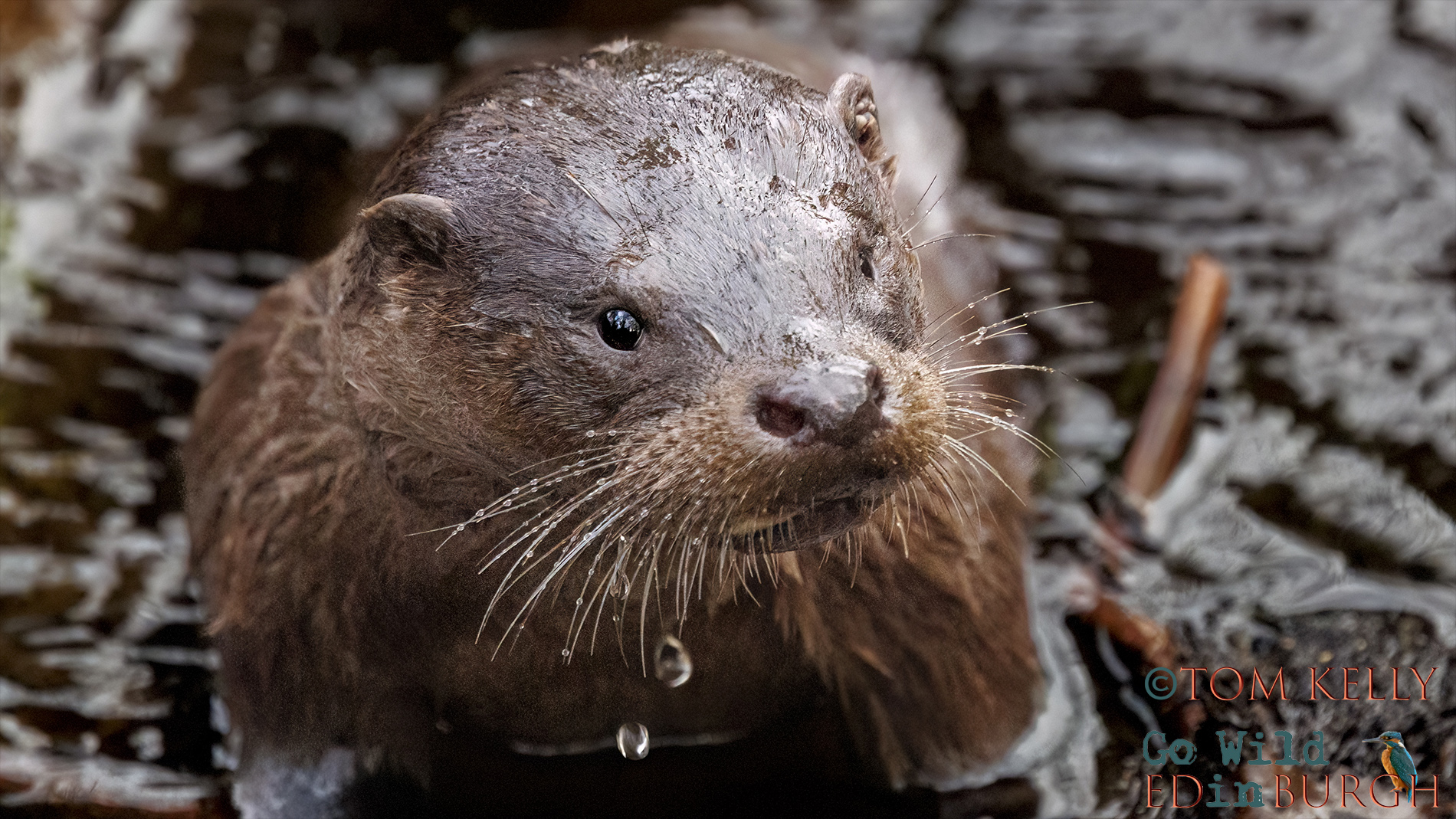
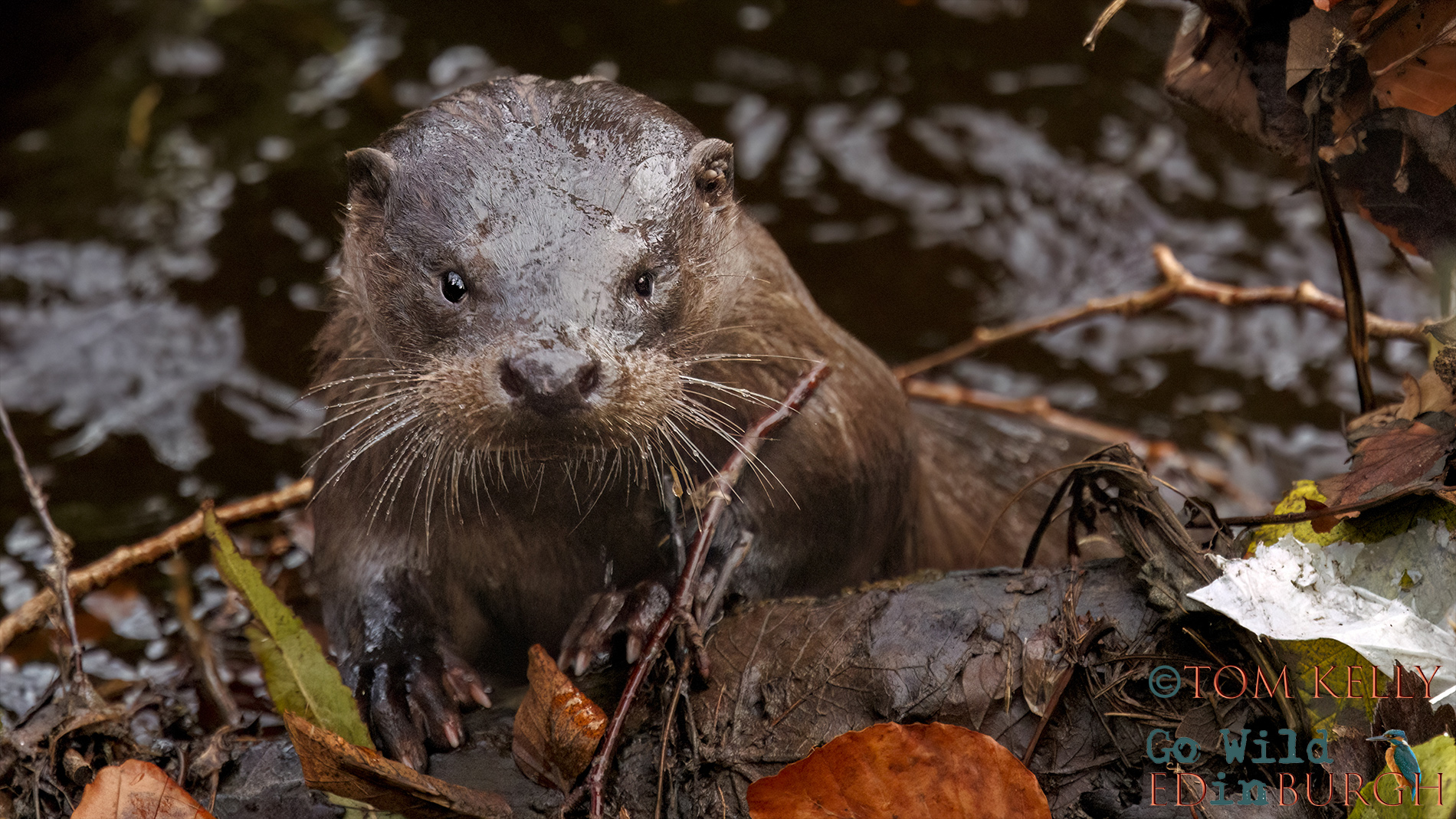
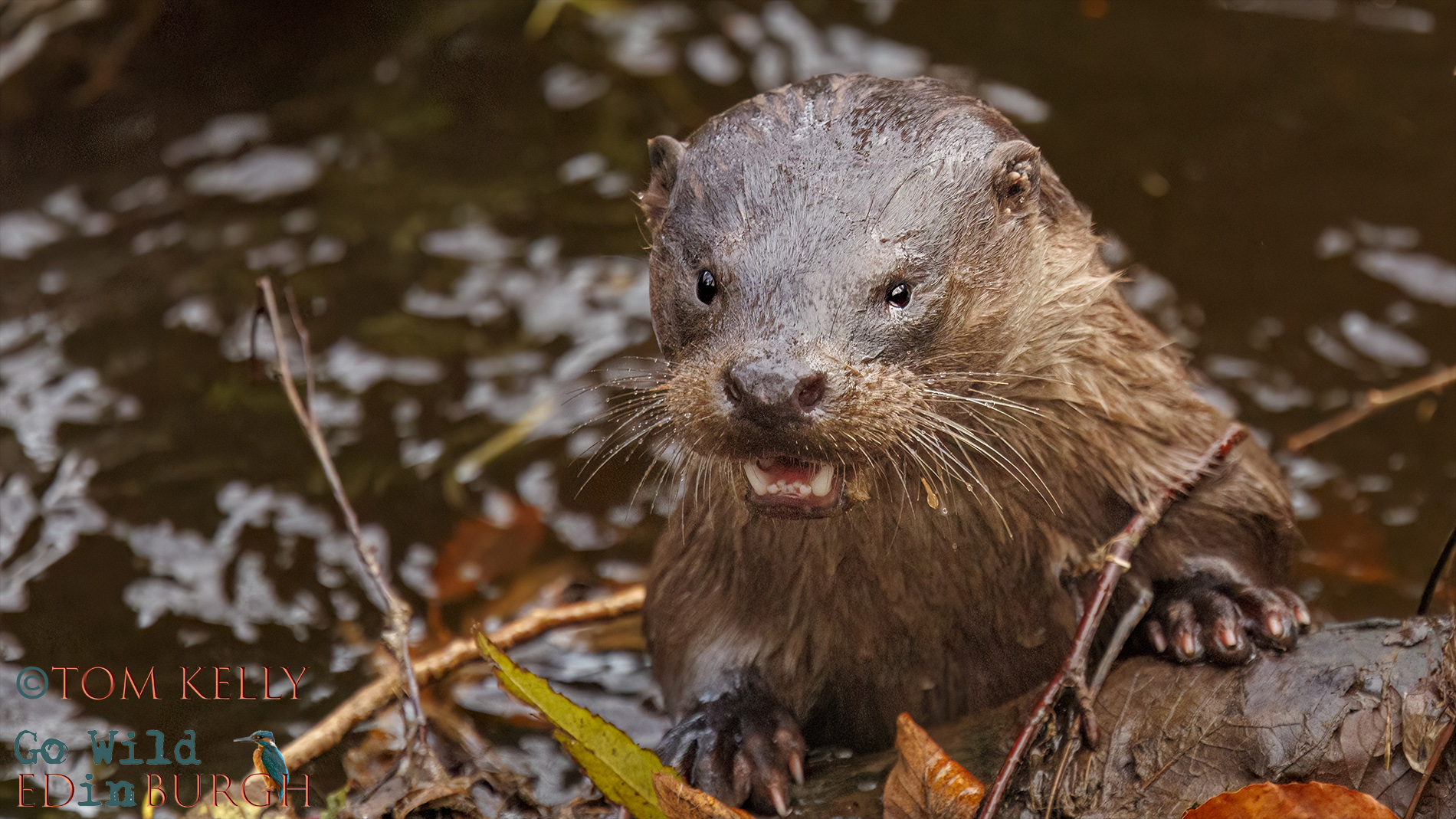
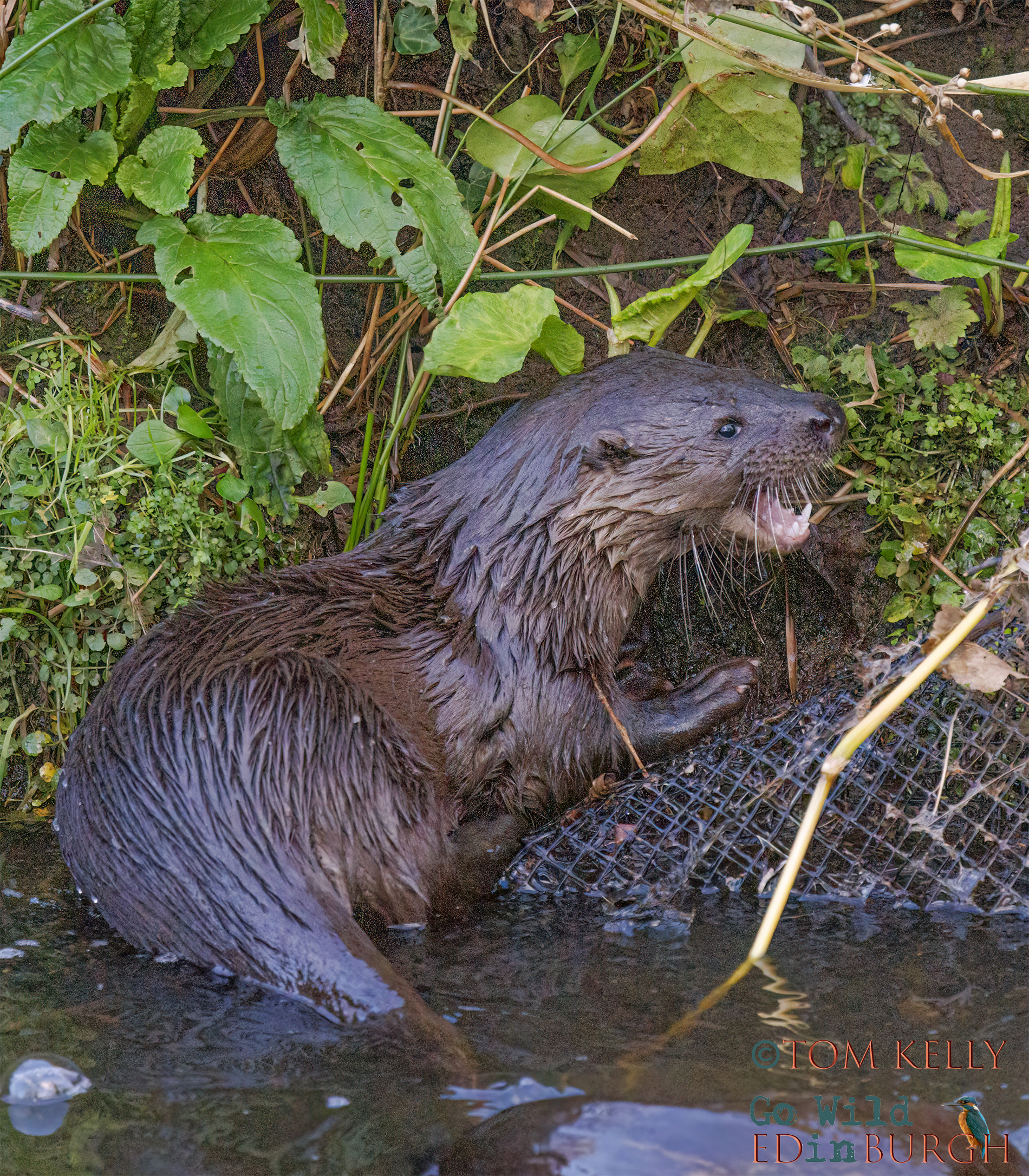
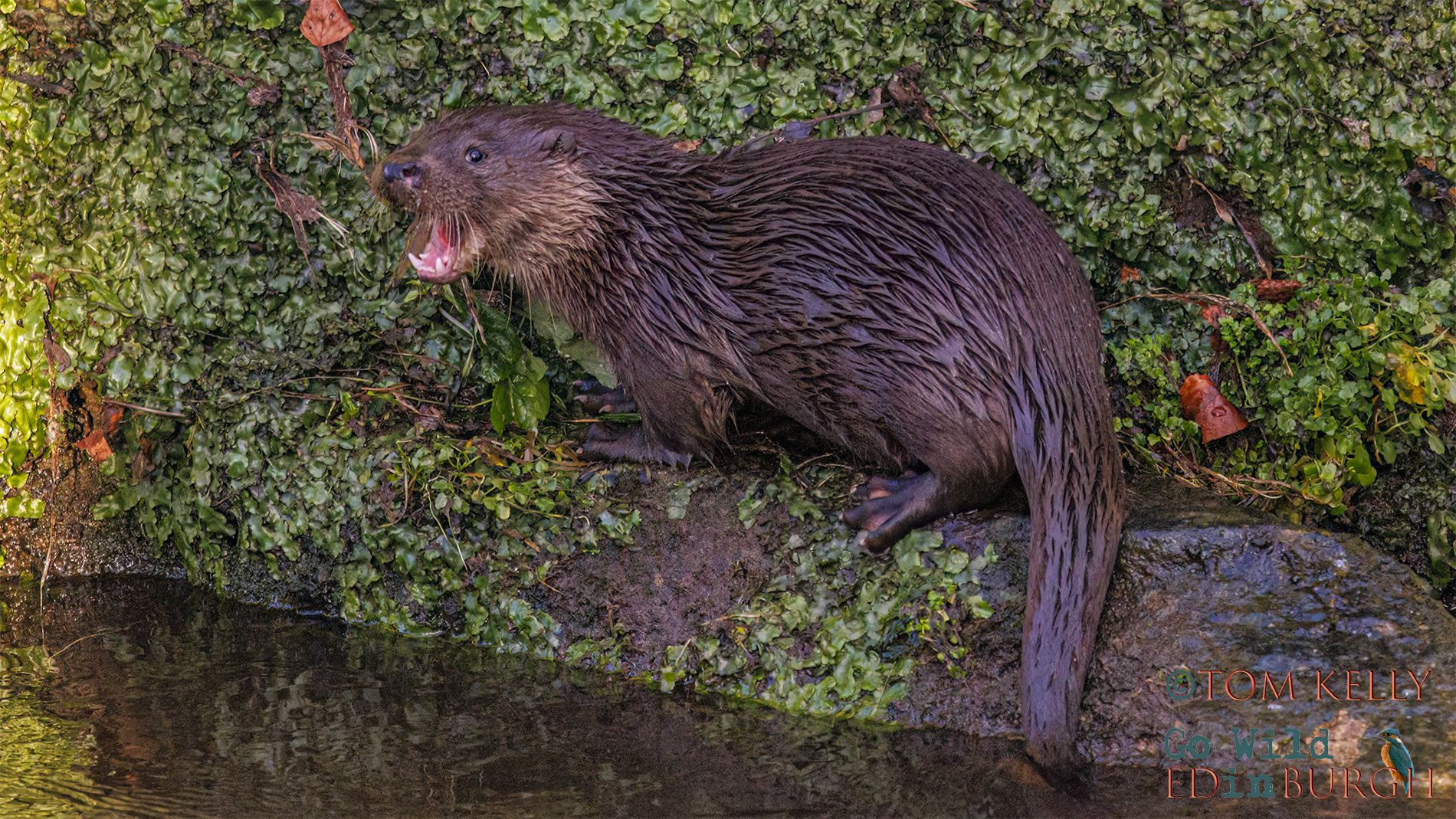
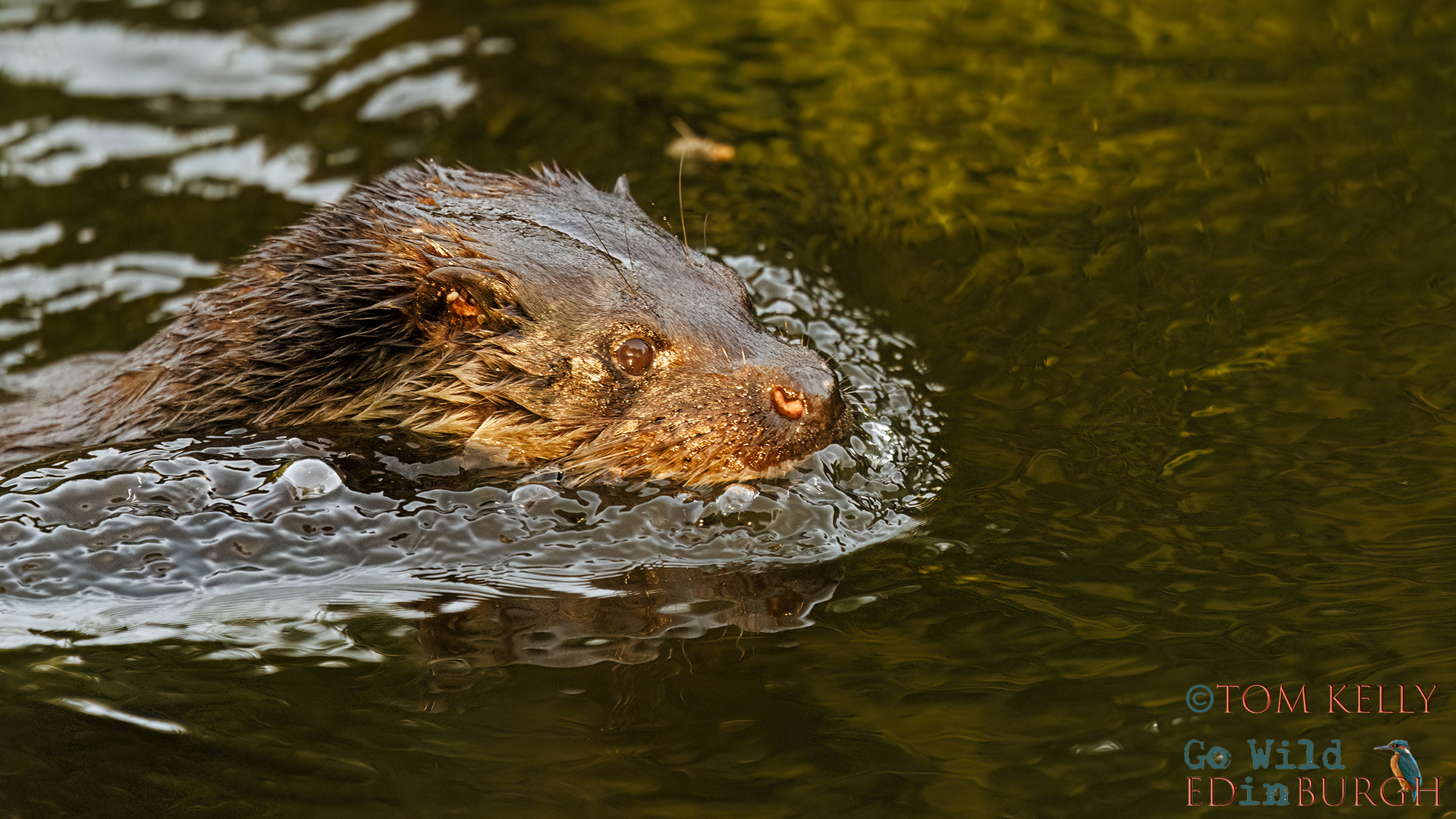
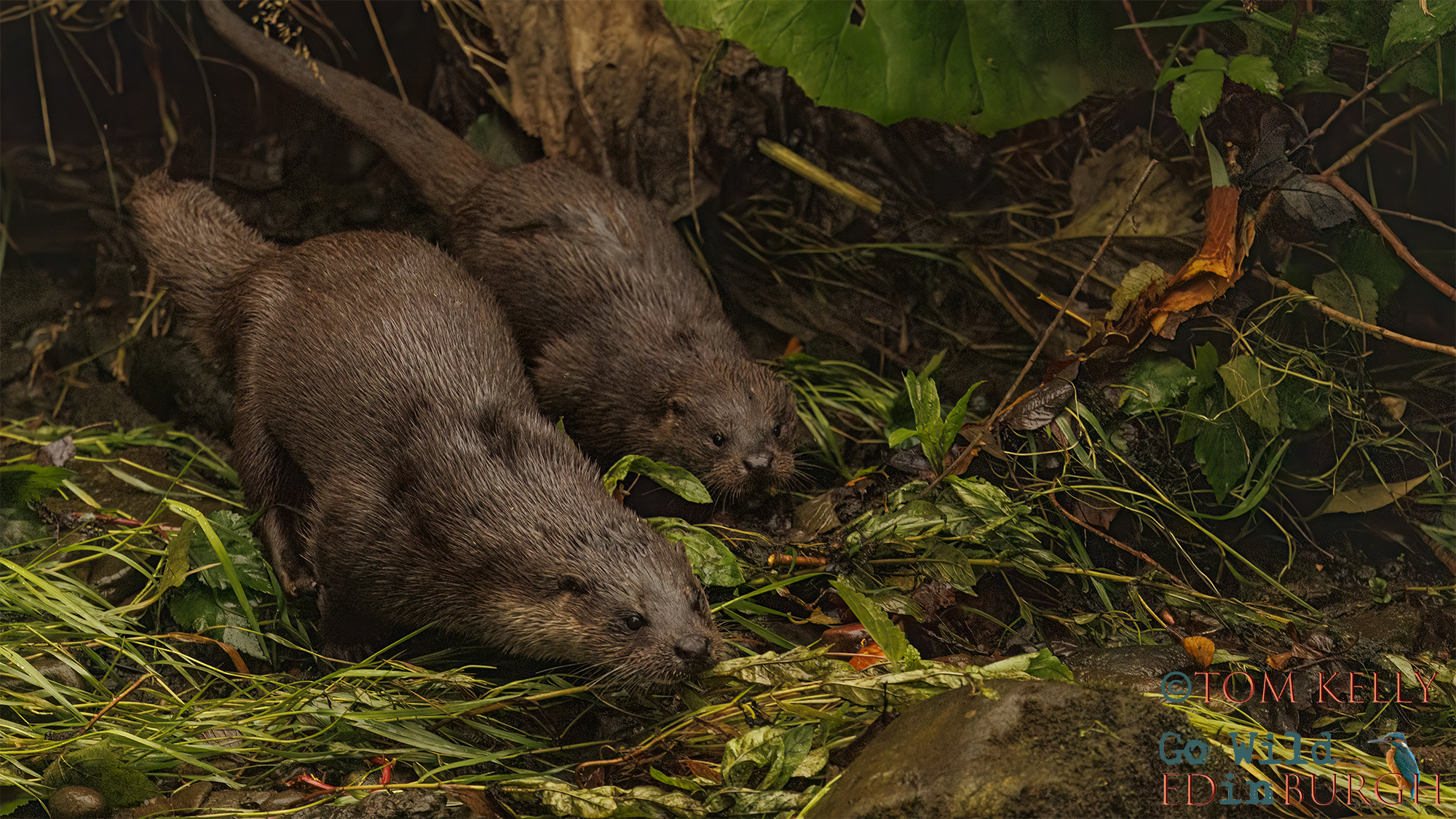
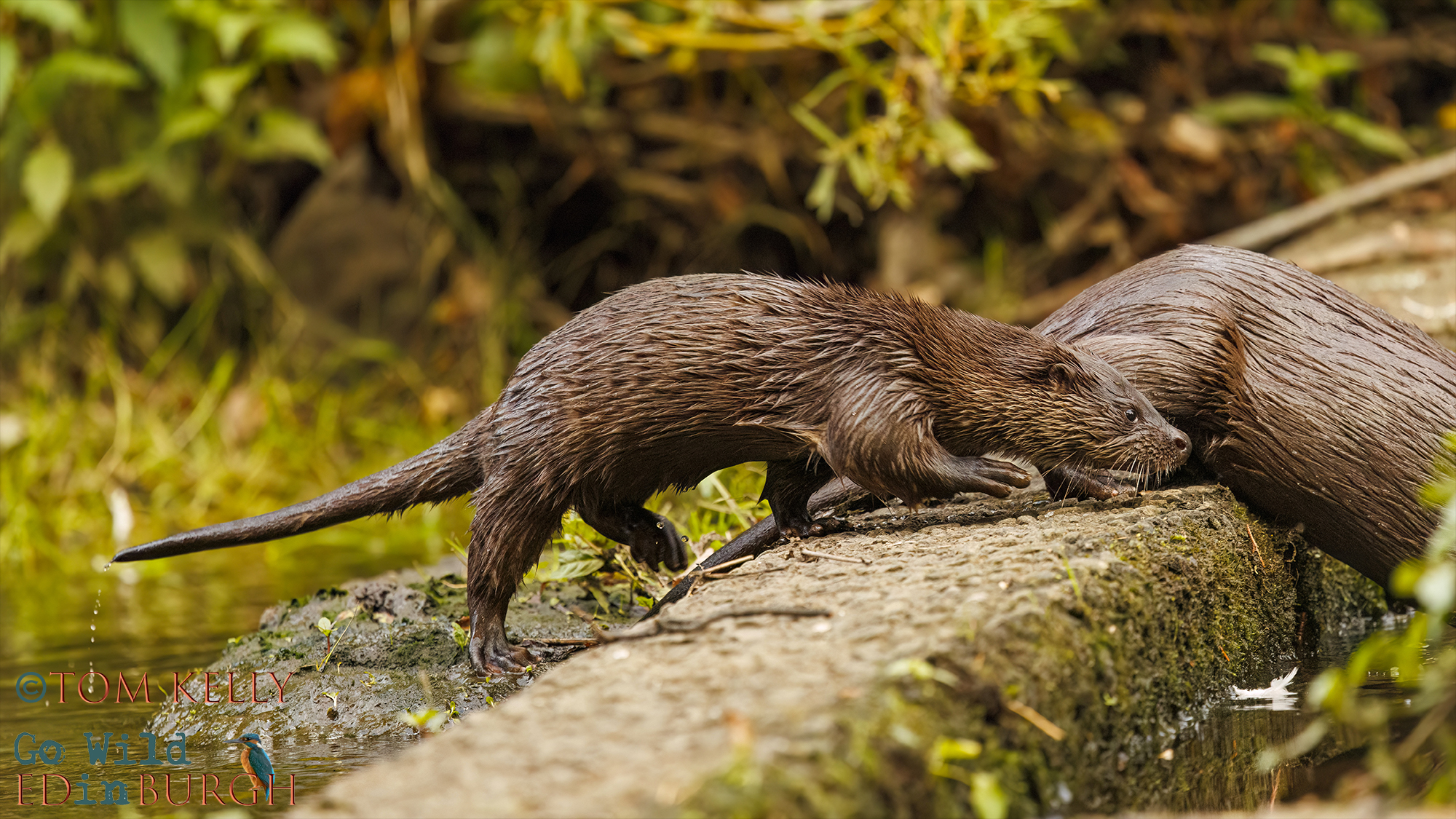
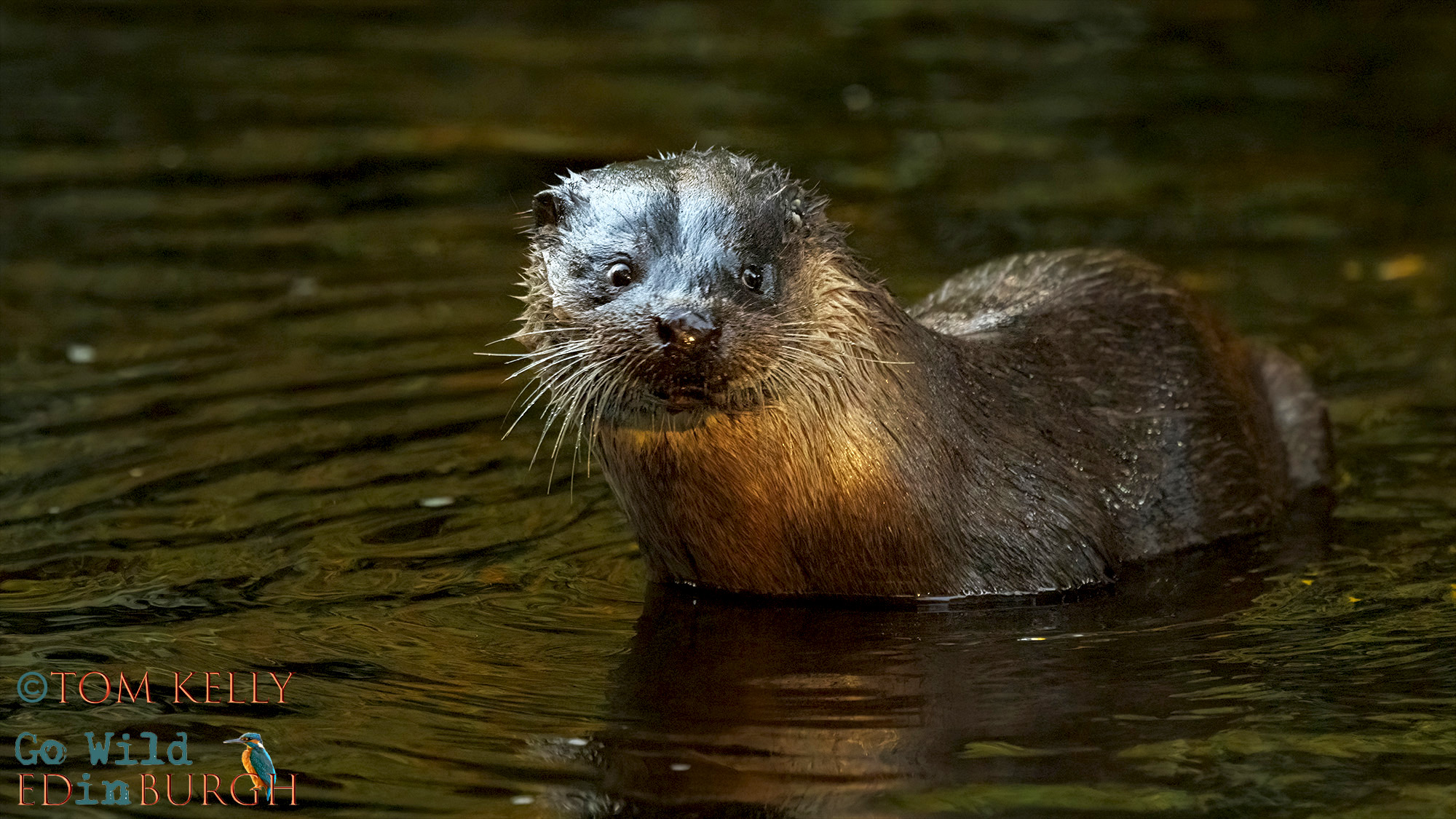
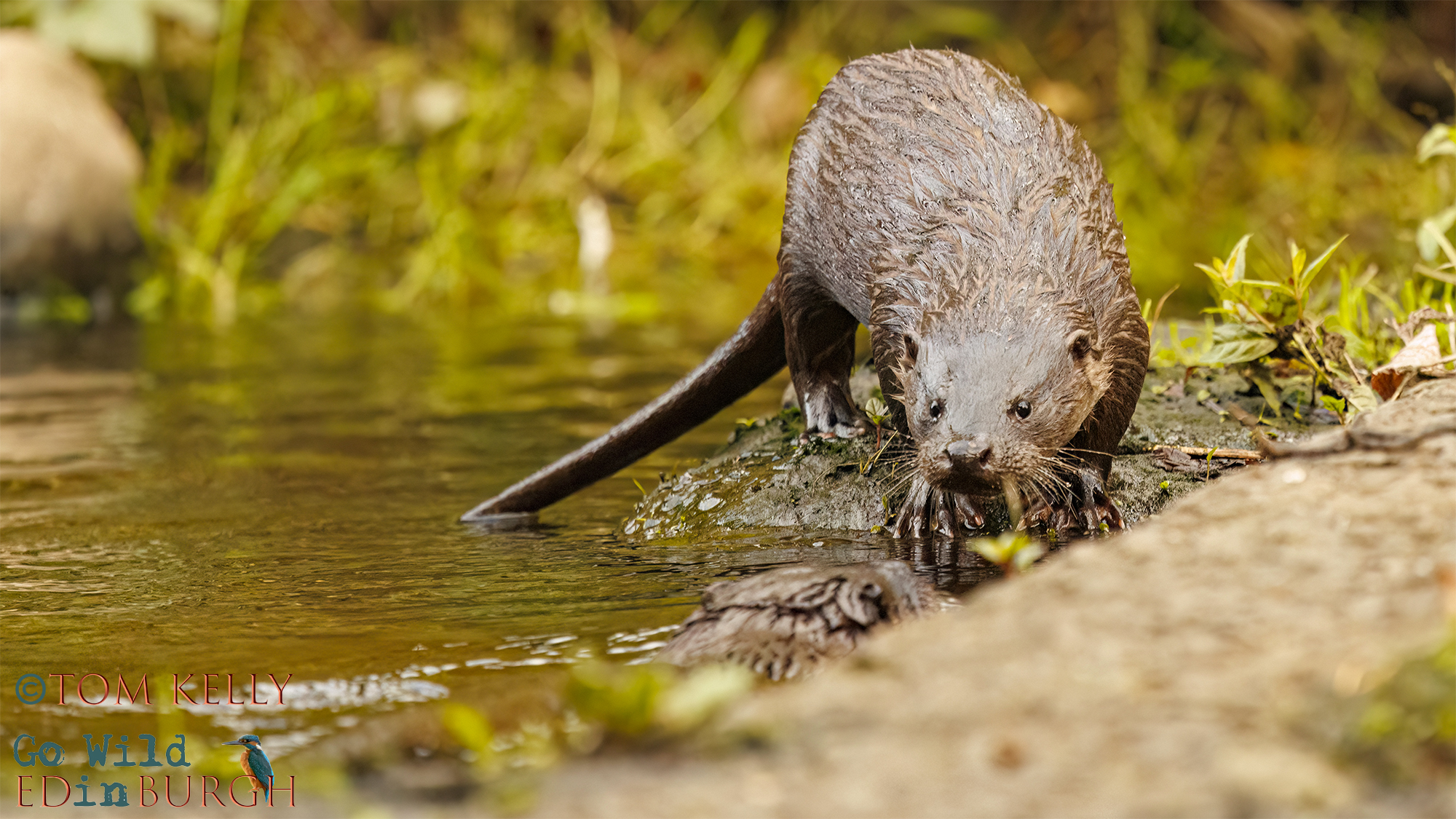
If you have never seen an otter before, you are looking for an animal roughly the size of a small dog.
Adult otters can measure approximately 100–130 cm from the tip of the nose to the end of the tail. They can also move surprisingly quickly when fishing, creating plenty of splashing in the water.
OTHER POINTS TO BEAR IN MIND
-
Otters do not normally travel around in groups on the Water of Leith.
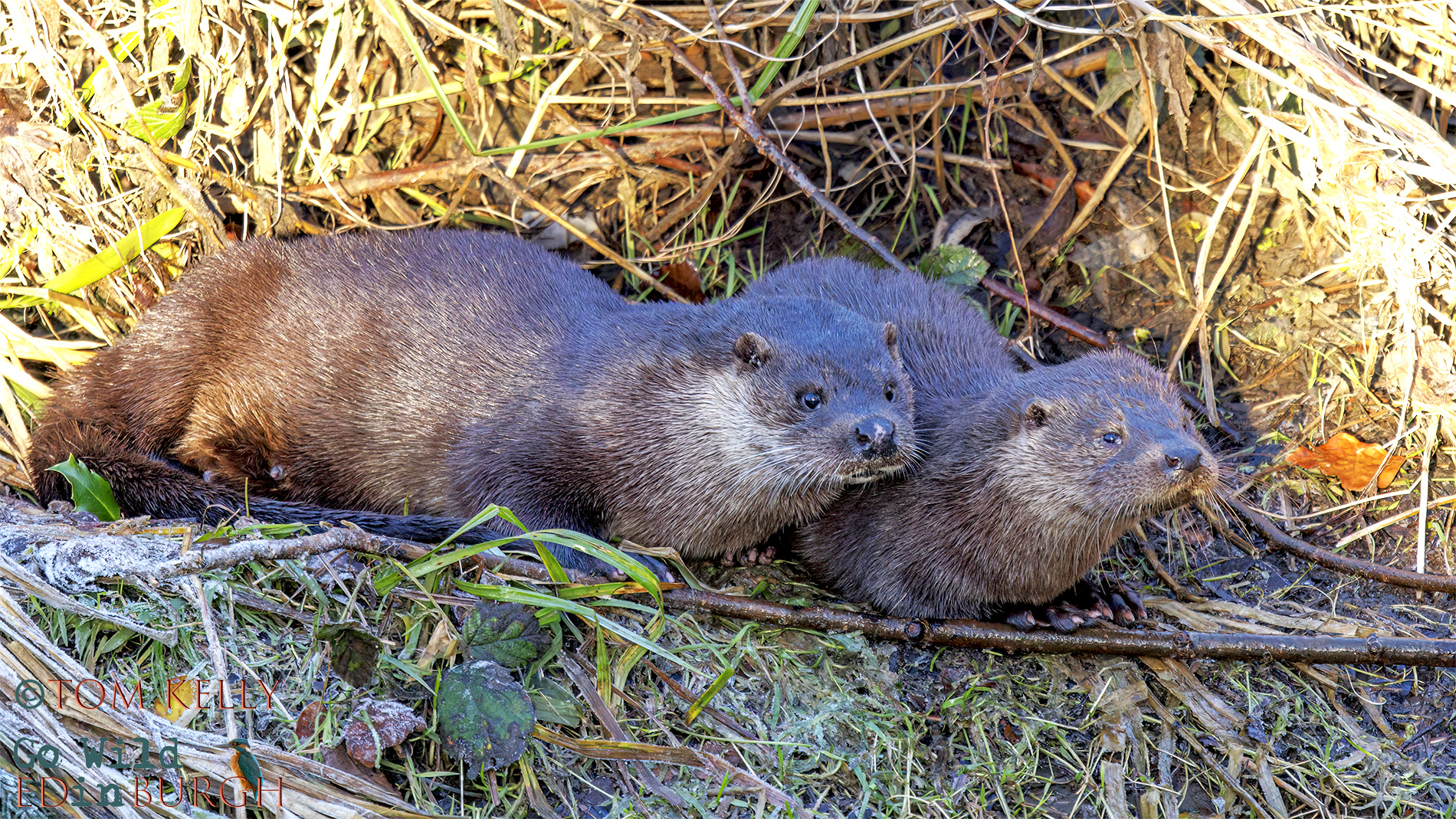
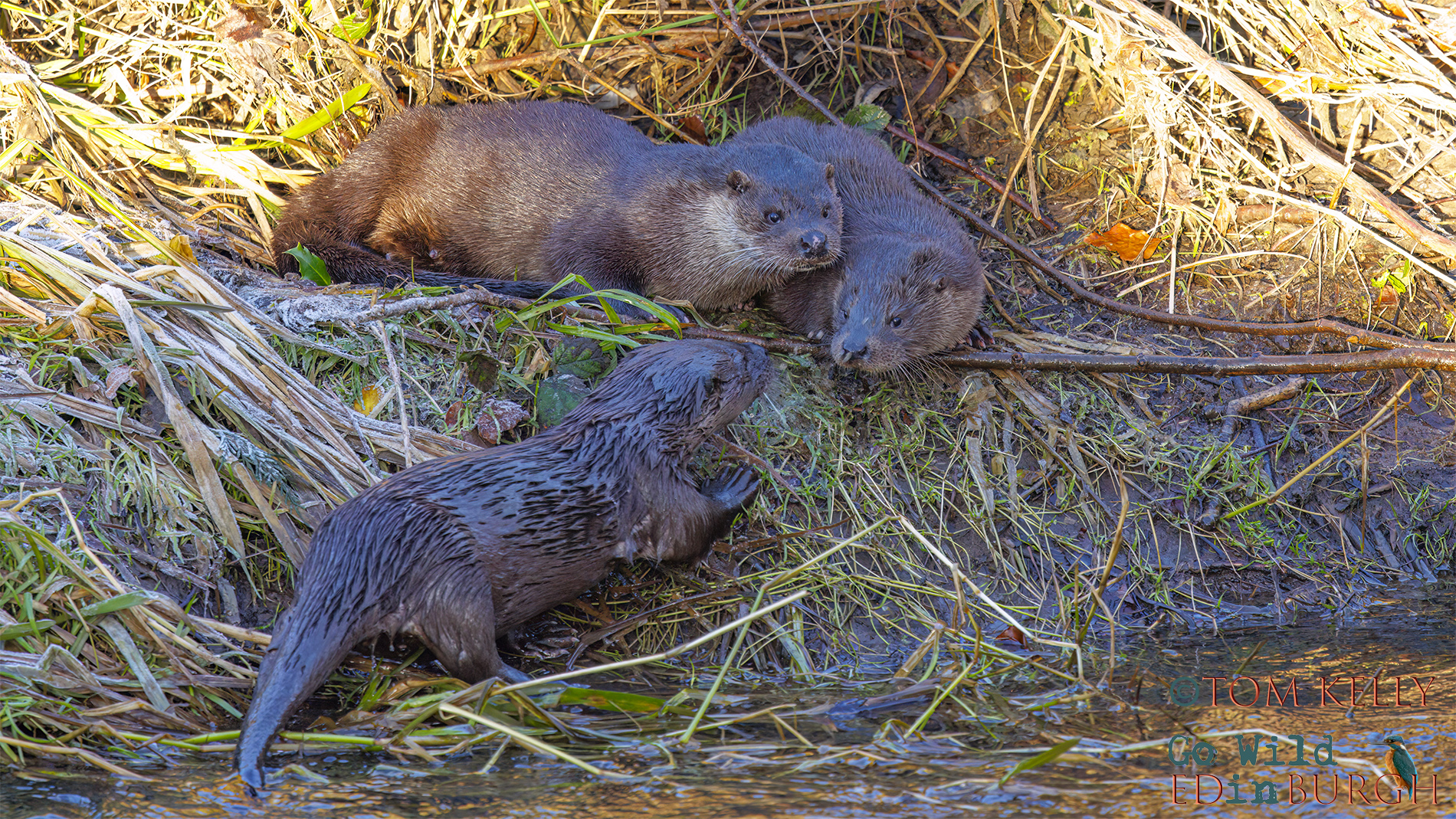
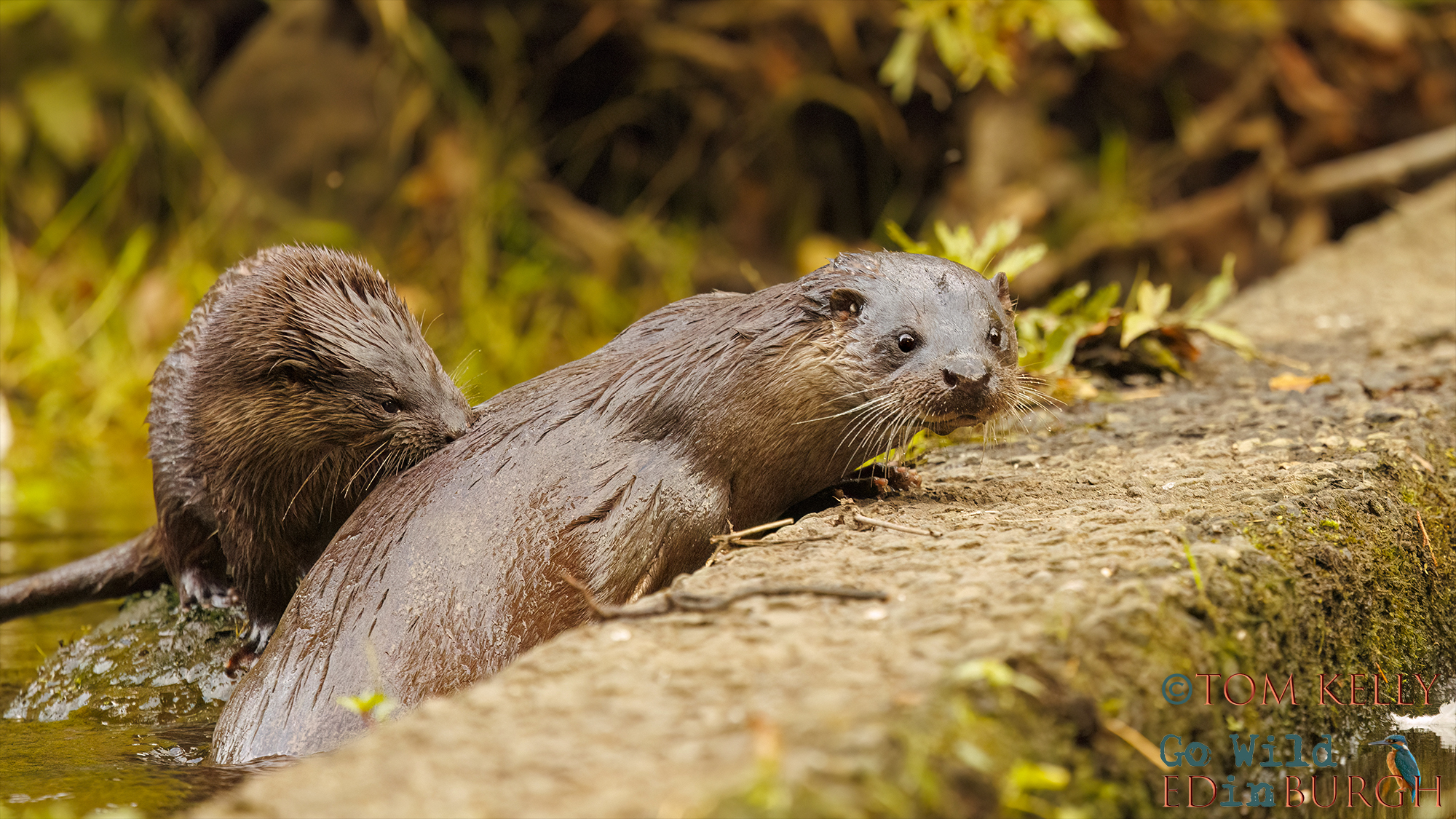
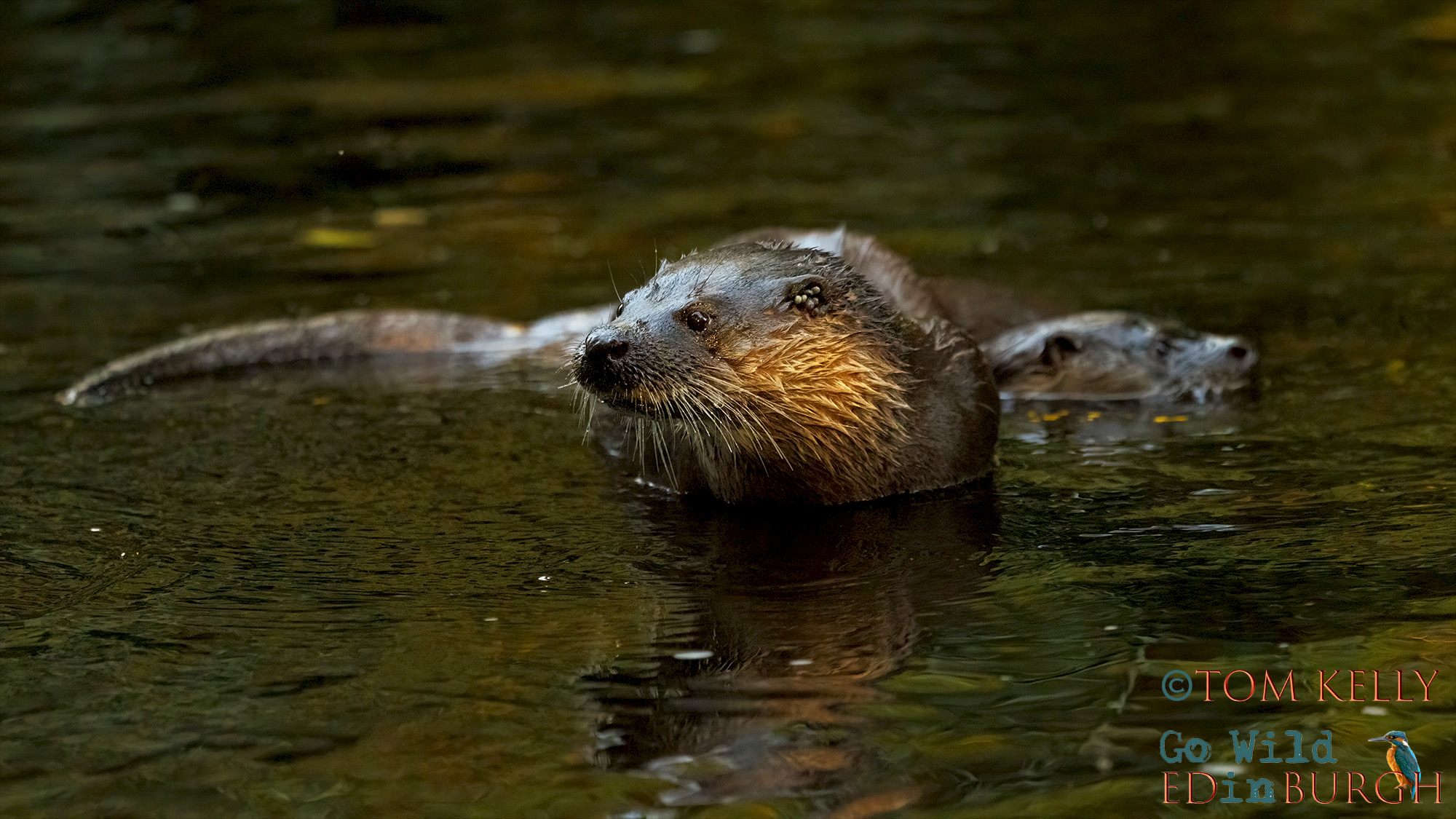
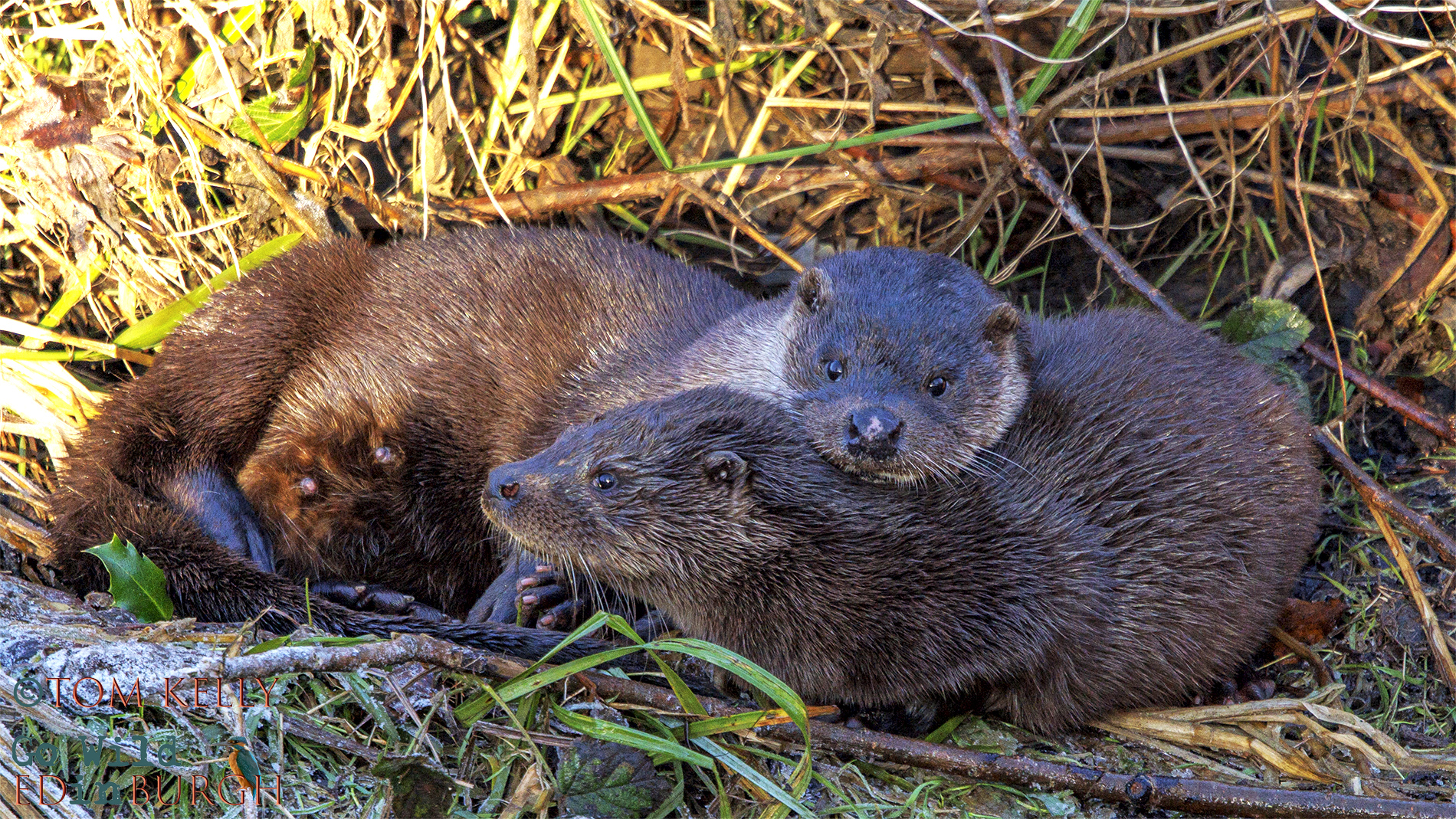
If you see more than one otter, it is likely to be a mother with cubs or, during the mating period, an adult male and female.
Once again, avoiding disturbance is essential. We do not want to interfere with mating behaviour, and we certainly do not want to risk separating cubs from their mother.
-
You may have heard that otters have an excellent sense of smell, so, where possible, it is worth trying to remain downwind.
The Water of Leith winds its way through the city, so you can find yourself going around in circles trying to work out which direction the wind is coming from!
In addition, there are usually other people using the Walkway, so even if you are positioned downwind, other people may not be.
I suspect this is less important in an urban environment than it would be beside a remote loch, such as those found on the Isle of Mull, but it is still something worth considering in more open sections of the river.
-
If you spot an otter, try to remain still and out of sight.
If the otter dives underwater, keep watching the surface for a line of bubbles. This can reveal the direction in which the otter is travelling.
It may continue downstream or move towards the opposite side of the river, but those bubbles can give you invaluable information about where it has gone.
This gives you an opportunity to move quietly into better cover.
STAY STILL – MOVE – HIDE – OBSERVE
-
When an otter dives for fish, it may remain underwater for around 5–20 seconds in a river, as relatively shallow as the Water of Leith.
The deeper and wider the river, the longer the dive can be. On a typical sea loch, an otter may remain underwater for approximately 20–30 seconds.
When the otter dives, this can give you a brief opportunity to move to a quieter and more secluded position — provided you do so carefully and without chasing the animal.
-
A single otter has only itself to worry about. If it does not like the sound of your camera shutter, the smell of your perfume, aftershave or deodorant, or simply something else about your presence, it can disappear very quickly.
A mother with two cubs is much more vulnerable.
She cannot move in two directions at once if her cubs decide to split up. For this reason, it is vital that you never put yourself between a mother and her cubs.
A mother will often take her cubs to known feeding areas with suitable resting places nearby. It is important that these locations are not disturbed by people approaching too closely, chasing the otters away or making the animals feel threatened.
-
If you are fortunate enough to see and photograph an otter, please keep the specific location to yourself when posting online or social media.
It is perfectly reasonable to say that you saw an otter on the Water of Leith. The Walkway extends for more than 12 miles, so that information does not reveal a precise location.
What should be avoided is publishing identifiable landmarks, exact locations or photographs that make it easy for large numbers of people to converge on a particular spot.
We have seen how quickly social media can create crowds around wildlife sightings. Social media posts about waxwings arriving at various parks and wildlife hotspots in Edinburgh resulted in groups of 35–40 people gathering in some locations within 20-30 minutes.
If that number of people were to gather around a family of otters, the potential for disturbance would be considerable. It could cause significant stress to the animals and, in the worst cases, contribute to separation between a mother and her cubs.
If we care about these animals, the welfare of the otters has to come before our desire to see, photograph or film them.
SO, IN SUMMARY
- Be observant when you are close to water level on the Walkway, particularly around sections where the water is still or slow-moving.
- Look for ripples on the surface of the water and try to work out what is causing them.
- Put the miles in. Otters can travel considerable distances — potentially 12–20 miles or more within their range. I’m not suggesting you need to walk that far, but if you are serious about seeing one, regular walks of an hour or two will significantly increase your opportunities over time.
- Listen for splashing and unusual sounds coming from the river, and investigate carefully.
- Watch the riverbank vegetation. If foliage suddenly starts moving, try to work out what is causing it.
- Get out early and late, particularly during the summer months, when dawn and dusk provide good opportunities to see otters.
- Look for footprints and spraints along the riverbank and around prominent rocks and boulders.
- Stay downwind where possible, particularly in quieter and more open areas.
And when you do see an otter – STAY STILL – MOVE – HIDE – OBSERVE
The most rewarding wildlife encounters are the ones where the animal doesn’t even realise you are there.
…& FINALLY
Sometimes I see otters….Sometimes I don’t! Ultimately, my goal is simply to spend time alone with nature and if I happen to come home with a few photographs as well, that’s even better!
Good luck — and, most importantly, enjoy the Water of Leith (or any river you can use these guidelines on), and respect the wildlife that lives there, as best you can.
Tom
CLICK ON ANY PICTURE BELOW TO VIEW THE ENLARGED CLICK-THROUGH GALLERY