How do you increase your chances of seeing Kingfishers on the Water of Leith?
I spotted my first kingfisher when I was about six or seven years old, on the River Braan near Amulree in Perthshire. For many years, my parents had a caravan on a farm there, and we would visit every second weekend and throughout the school holidays. As a result, I spent around 80 days a year on the River Braan until I was about 17.
I spent much of that time in and around the river, building dams, catching minnows and swimming, while watching kingfishers, herons and dippers. Without really realising it at the time, I learnt a huge amount about these birds simply through observation.
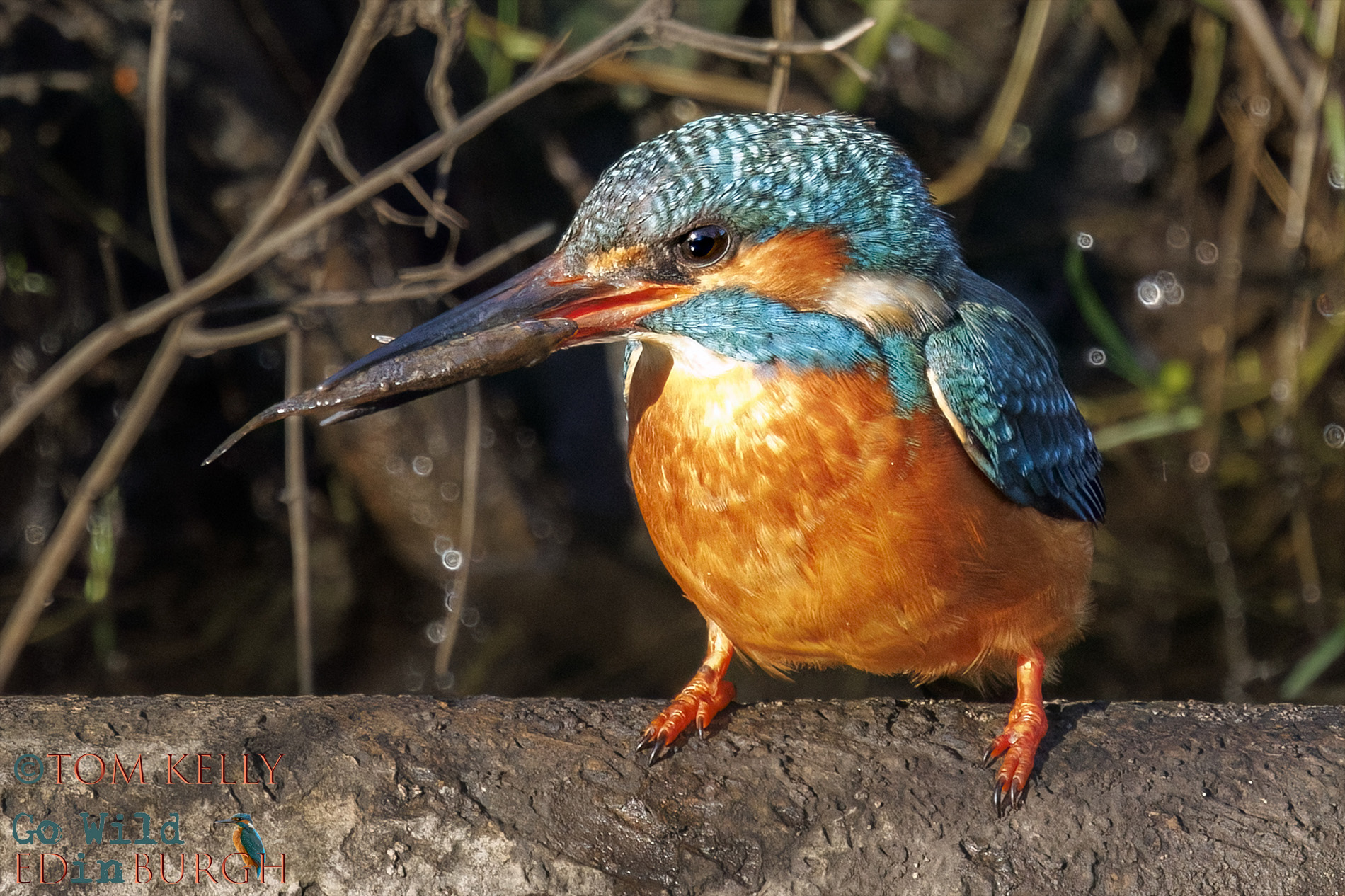
Decades passed before I took my first wildlife photograph. That happened on 21 December 2020, when my very first wildlife photograph was of a small kingfisher on the Water of Leith.
After six years of researching kingfishers on the Water of Leith, I have been able to apply much of what I have learnt successfully on many other rivers throughout Scotland.
Here are some of the key tips that I use for spotting kingfishers:
1. Stay close to water level
One of the most important factors when looking for kingfishers on the Water of Leith is to position yourself on sections of the walkway where you are close to water level.
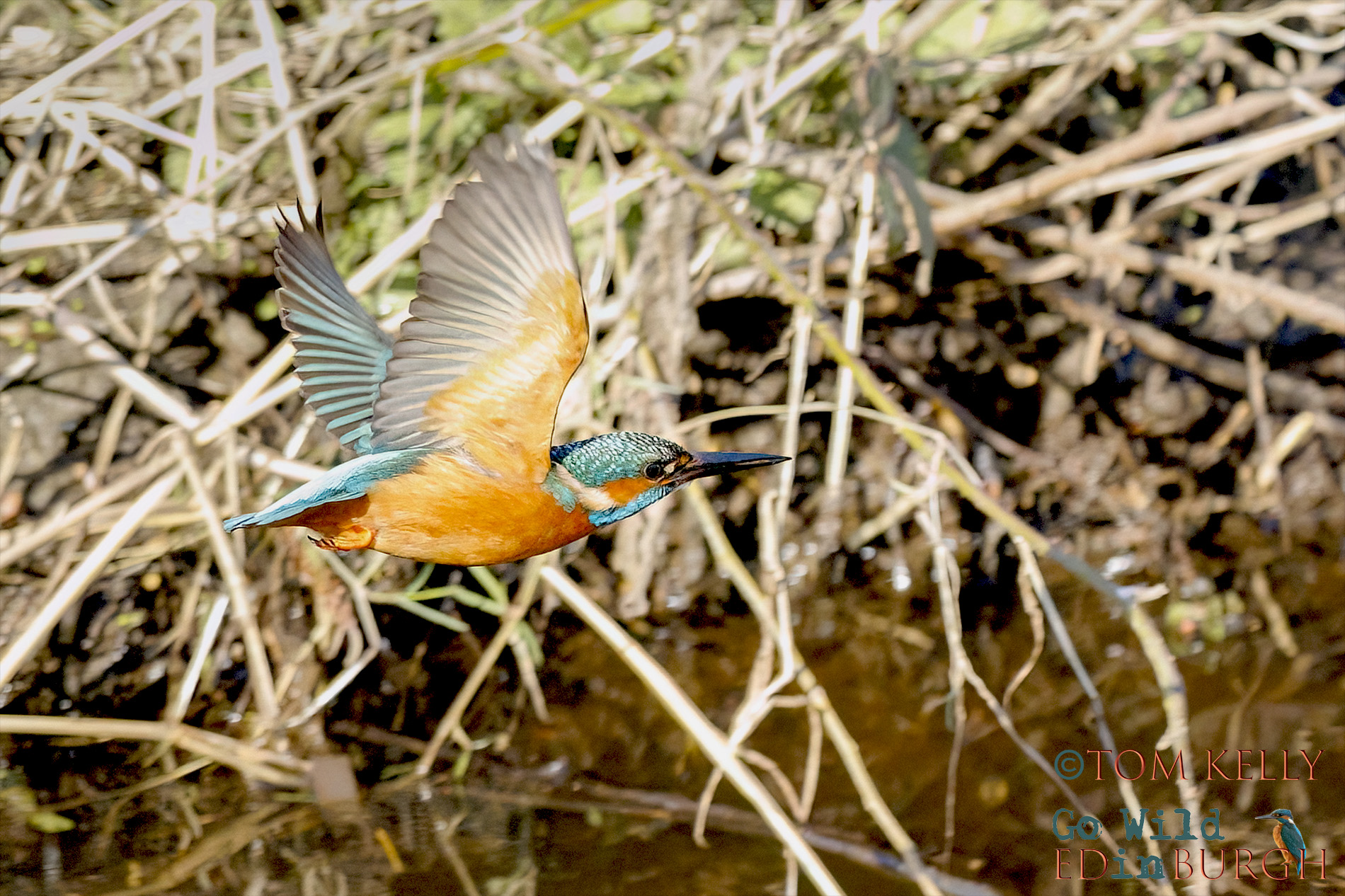
There are many sections where the walkway moves away from the river and rises 30–40 feet above the water. From this height, spotting a kingfisher becomes extremely difficult, particularly because they typically fly just 1–2 feet above the water and perch on branches around 3–12 feet above the river.
The section between Balerno and Bog’s Bridge contains several stretches where the walkway is separated from the river. For this reason, I tend to concentrate on the section from Bog’s Bridge downstream towards Leith, where the walkway remains relatively close to the water for much of the route.
The full walkway from Balerno to Leith is approximately 12.75 miles long. By concentrating on the section from Bog’s Bridge to Leith, you can reduce your search area to approximately 7.5 miles.
–
2. Concentrate on still or slow-moving water
The most productive areas for spotting kingfishers are sections of the river where the water is still or moving relatively slowly.
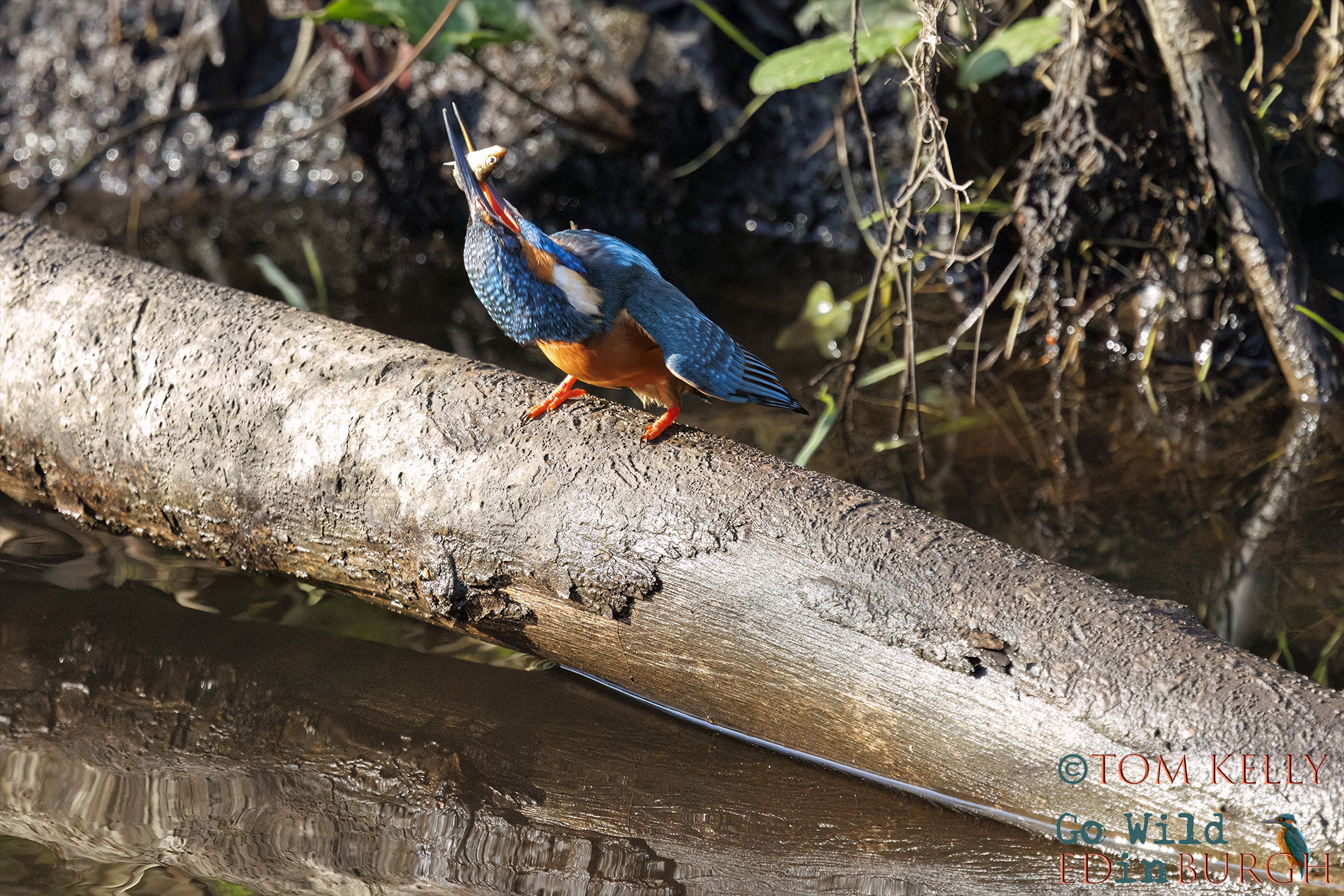
Kingfishers cannot swim and rely on diving from a perch to catch fish, so slower-moving water can provide more suitable feeding conditions.
As a rough estimate, I would suggest that around 35% of the Water of Leith is still or slow-moving under normal conditions. This potentially reduces the search area you need to concentrate on, from 12.75 miles to around 4.5 miles.
If you are concentrating specifically on the Bog’s Bridge to Leith section, your potential search area is reduced from approximately 7.5 miles to around 2.5 miles.
–
3. Pay attention to river levels
When I refer to ‘still or slow-moving water’, I am referring to the river under normal flow conditions.
Following periods of heavy rainfall, the Water of Leith can rise rapidly and the water flow can become considerably faster. When this happens, kingfishers move to alternative feeding areas, including the canal, larger ponds, garden ponds and coastal areas.
One useful way of monitoring conditions is to check the SEPA water-level readings for the Water of Leith.
In my experience, a useful guide is the reading from the Murrayfield station. When the water level rises above approximately 0.6 metres, I find that the river is generally flowing quite quickly and some kingfishers, dippers and herons may move to alternative feeding grounds.
When the reading falls below this level, kingfishers are more likely to return to the river.
Here is a link to SEPA’s Water of Leith water levels at Murrayfield: SEPA Water of Leith (Murrayfield)
–
4. Look for low-hanging perches
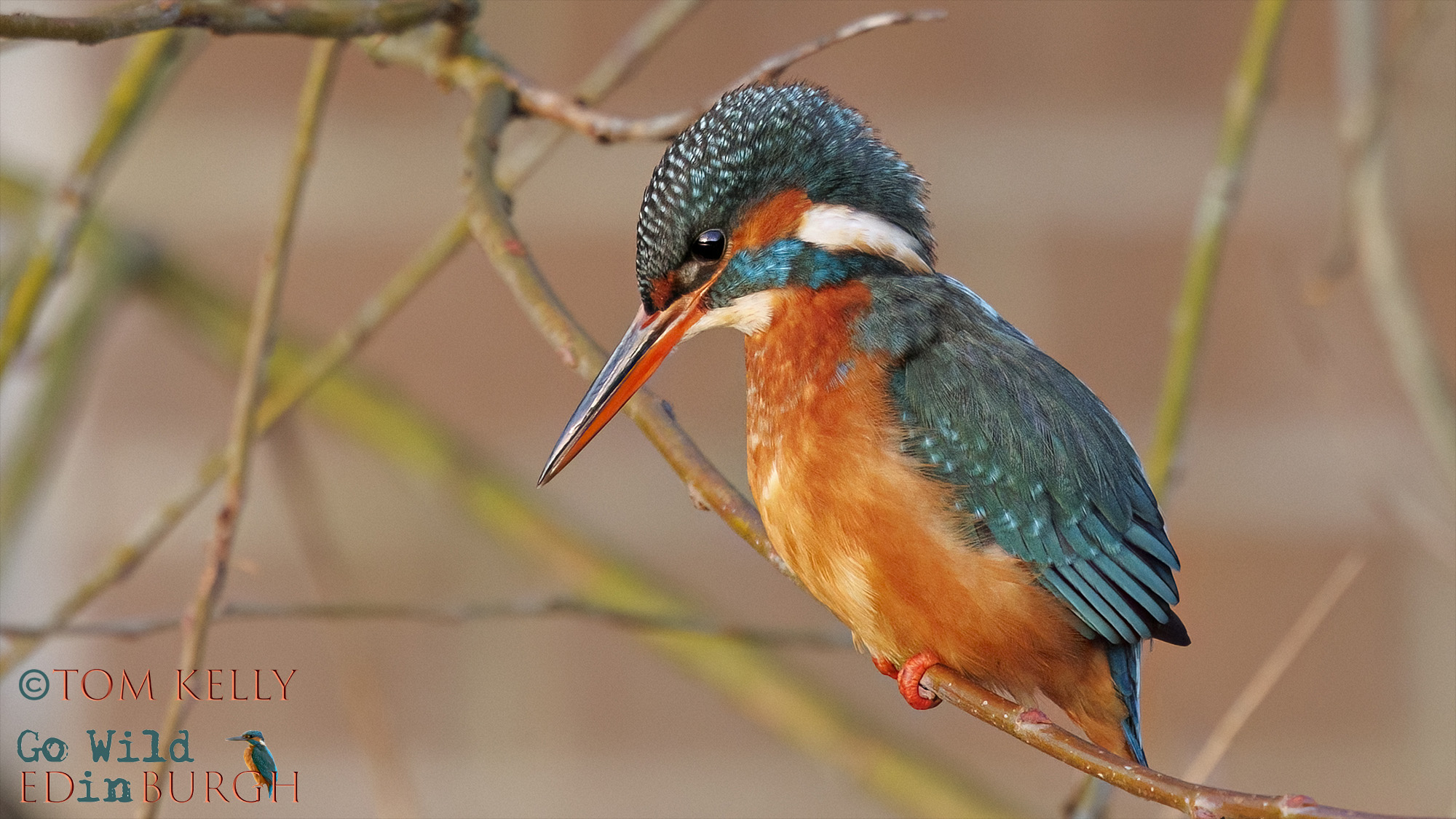
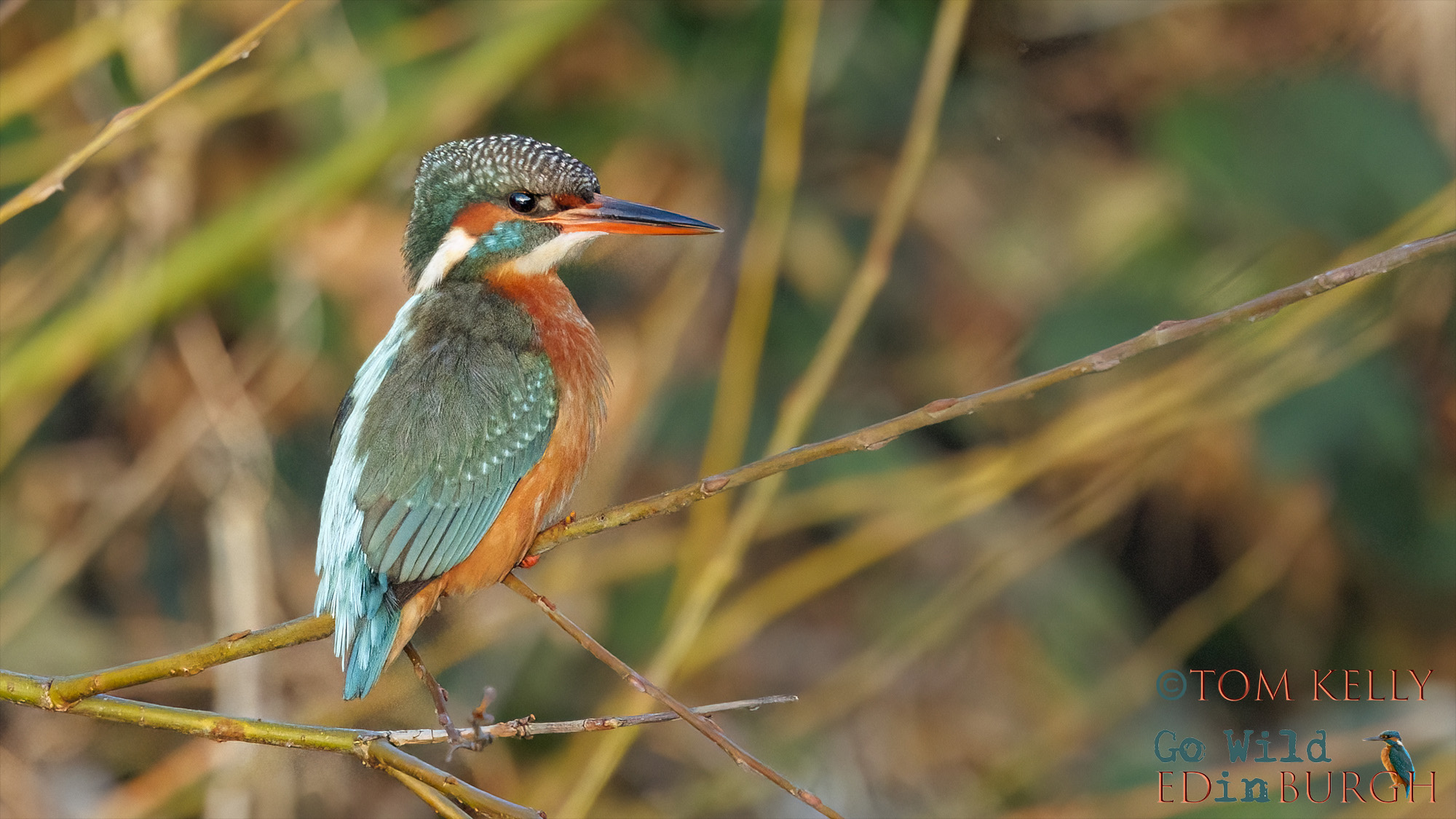
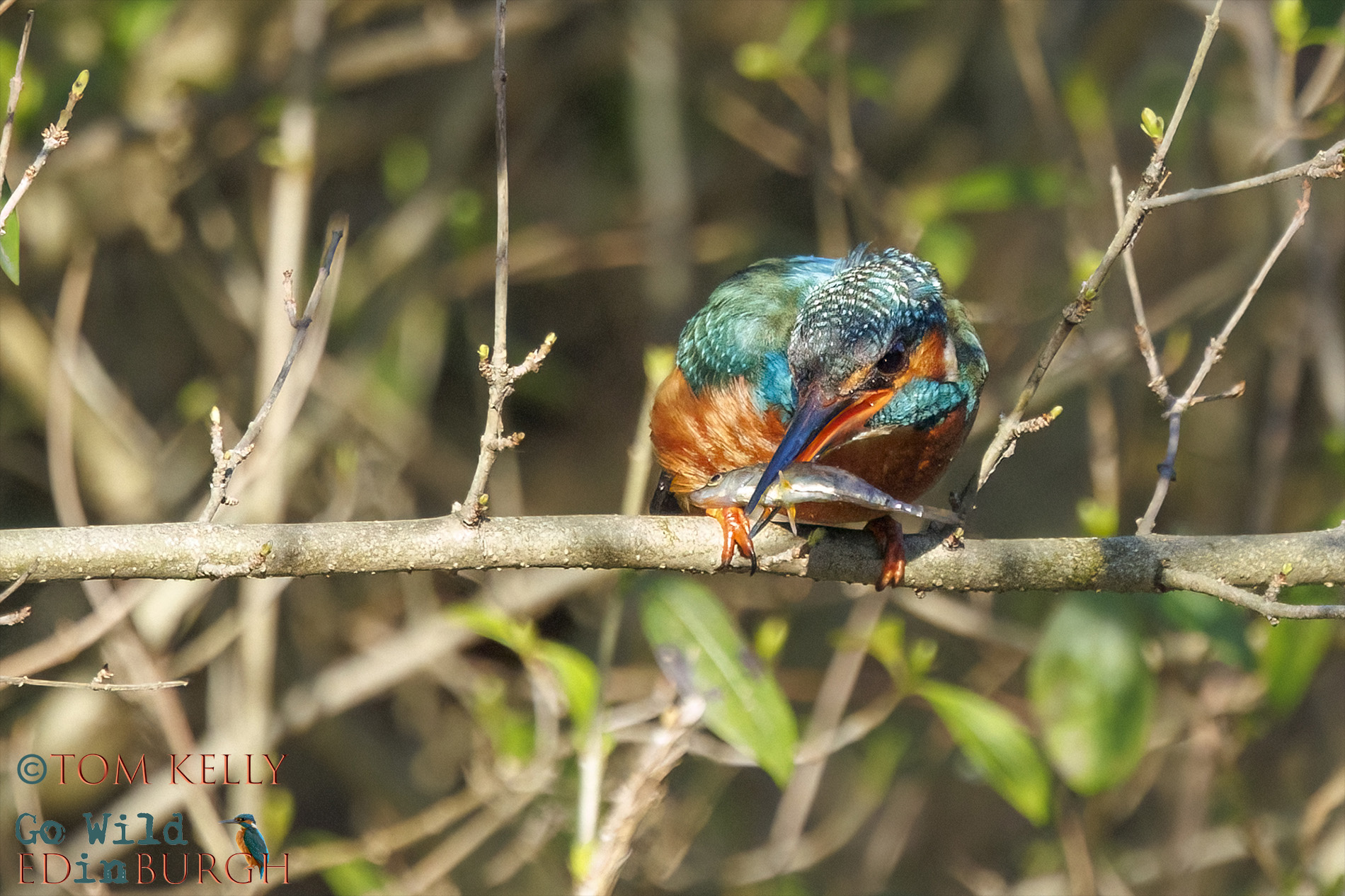
Kingfishers frequently perch on low branches approximately 3–12 feet above the water, particularly where the river is still or slow-moving.
As you walk along the riverbank, keep your eyes trained on this height range and look carefully at branches, exposed roots and other suitable perches immediately above the water.
Rather than simply scanning the river itself, try to anticipate where a kingfisher would sit while waiting for an opportunity to dive.
–
5. Look for shaded water
Fish tend to avoid bright, direct sunlight for prolonged periods and will often move towards areas of shade.
As a result, kingfishers will frequently use perches overlooking shaded sections of water, where they can hunt without being exposed to bright sunlight.
When walking the river, therefore, pay particular attention to shaded pools and stretches of slower-moving water, especially where suitable branches provide a clear view of the water below.
–
6. Learn the kingfisher’s call
Kingfishers have a distinctive, high-pitched ‘peep’ or ‘beep’ call, which can be extremely useful when trying to locate them.
As they fly rapidly along the river, you may hear a kingfisher approaching before you see it. They can cover a considerable distance very quickly, so listening carefully can give you a valuable head start.
If you hear the call approaching and then suddenly notice that it has stopped, there is a good chance that the bird has landed on a favoured perch nearby.
If you are unfamiliar with the kingfisher’s call, a bird-identification app can be extremely useful for learning the sounds of different species.
I can highly recommend the Merlin Bird ID app, which is free – CLICK HERE.
–
7. Look for long, straight stretches of river
Long, relatively straight stretches of water can be particularly productive because they give you a better opportunity to see or hear a kingfisher approaching.
If you position yourself discreetly beside one of these stretches, you may be able to hear the bird before it reaches you and watch it as it flies past.
There is also a good chance that it will stop to feed nearby if suitable perches are available above still or slow-moving water.
The key is to remain as inconspicuous as possible. The less visible you are, the more likely you are to see natural behaviour.
–
8. Use winter to identify your best perches
Winter can be an excellent time to locate kingfisher perches because the trees have lost their leaves.
Take note of the branches and other perches where you see kingfishers sitting during the winter months. These locations are worth remembering because they are often positioned above productive feeding areas.
When the foliage returns in spring and summer, you can then return to these locations, find a discreet position and watch for kingfishers diving for fish.
By identifying these locations during winter, you can effectively build your own map of productive kingfisher habitat.
–
9. Look particularly carefully during the breeding season
Kingfishers can produce 2–3 broods in a year, with around 3–6 chicks in each brood. Each chick requires a substantial supply of small fish, meaning the adults have to make repeated fishing trips to keep the young fed.
This increased demand for food can provide more opportunities to observe kingfishers actively hunting along the river during the breeding season.
Once the young birds fledge & begin accompanying the adults, it is also possible to see several kingfishers together in the same area. Seeing a family group of 3–4 birds along the river can be a particularly memorable experience.
The period from May to August is therefore one of the best times of year to look out for increased kingfisher activity but bear in mind that there will be a lot more leaves on the trees that obscure your view.
–
10. Watch for unusual behaviour from young birds
Once young kingfishers fledge, the adults continue to show them how to fish, but this period of instruction is relatively short before the youngsters are expected to fend for themselves.
During this time, you may notice behaviour that differs from what you normally see.
You may observe unusual flight patterns, frequent high-pitched calls and interactions between young birds as they establish themselves. You may also witness young kingfishers being chased away as they are forced to find and establish their own territories.
Learning to recognise these behaviours can help you identify when several birds may be using the same stretch of river.
–
11. Learn how to distinguish males, females and juveniles
Once you have become familiar with kingfishers, it is possible to distinguish males, females and juveniles by looking closely at their bills and legs.
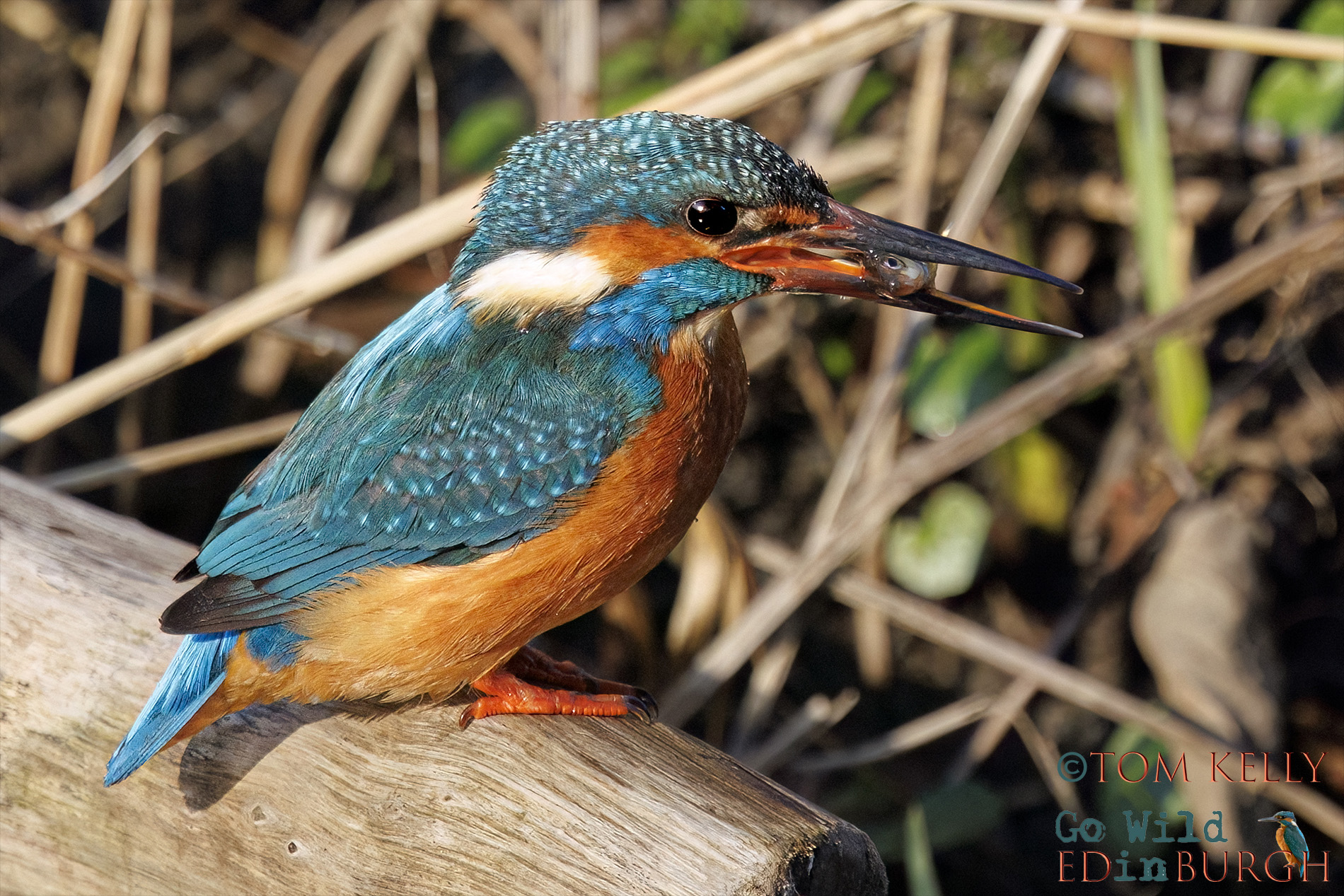
The adult male has an entirely black bill, while the female has a black upper bill with orange or reddish colouring on the lower mandible.
Juvenile kingfishers have darker legs and feet and typically show a white tip at the end of the bill.
These differences can be surprisingly useful when trying to work out which birds you are seeing, particularly during the breeding season when adults and young birds may be present in the same area.
–
12. If you see a kingfisher, keep an eye out for an otter!
Finally, if you spot a kingfisher perched above the river, don’t immediately focus all your attention on the bird. Take a good look at the water below it as well.
Kingfishers are known to take advantage of fish disturbed by otters as they move through the river and turn over stones while searching for food.
So, if you are fortunate enough to see a kingfisher, keep watching the water around it. You may just get a two-for-one wildlife encounter and see an otter as well!
These are the techniques and observations that I use when searching for and photographing kingfishers on the Water of Leith.
Good luck, and I hope these tips help you find your own kingfisher!
CLICK ON ANY PICTURE BELOW TO VIEW THE ENLARGED CLICK-THROUGH GALLERY